

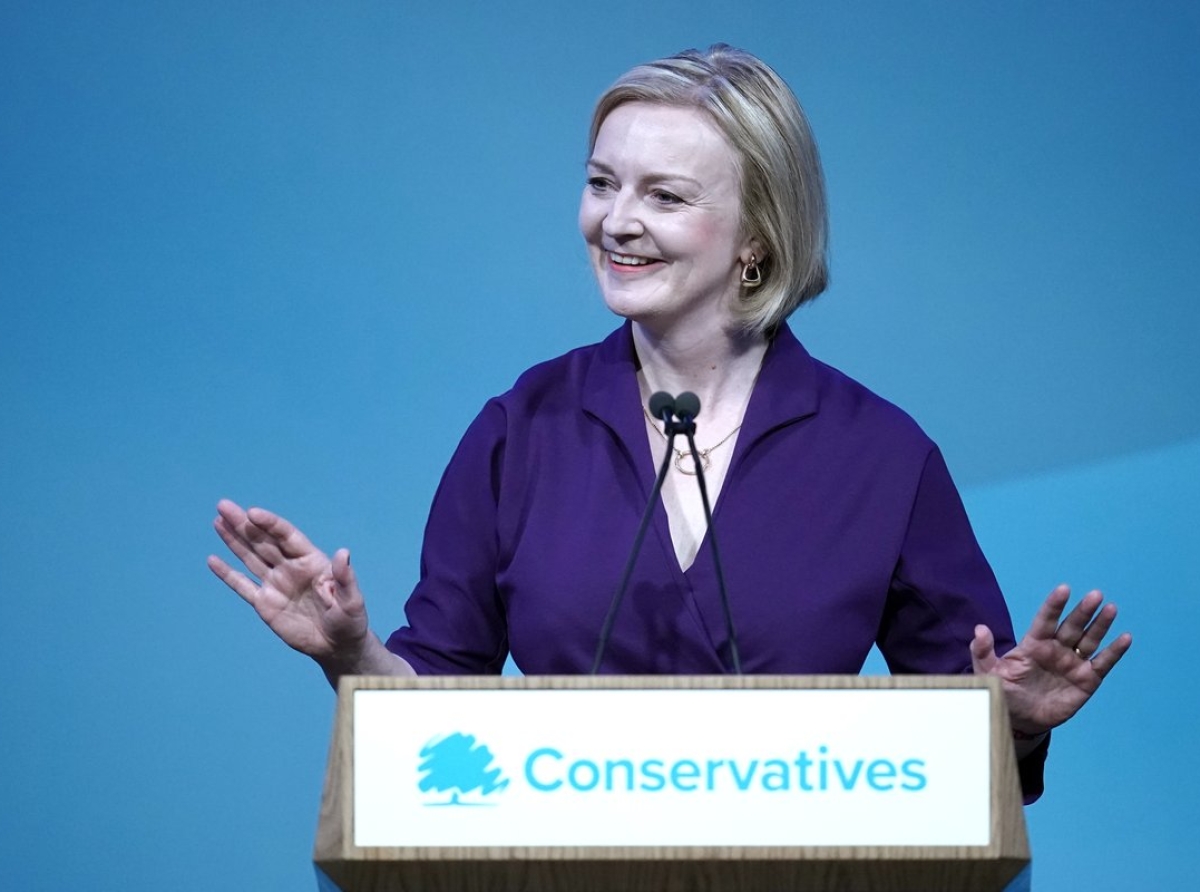
Liz Truss has promised to deal with surging energy costs and to cut taxes after winning the Tory leadership contest to become the next PM.
She will succeed Boris Johnson after being formally appointed by the Queen at Balmoral Castle on Tuesday.
The 47-year-old, the UK's third woman PM, will then announce her cabinet with jobs expected for allies Kwasi Kwarteng and James Cleverly.
She beat rival Rishi Sunak with 57% of the vote, a narrower win than expected.
In her victory speech, she promised a "bold" programme of tax cuts to grow the flagging economy and prevent the UK tipping into recession.
She will take the reins of power on Tuesday, bringing Boris Johnson's turbulent premiership to an end less than three years after the Conservatives' resounding election victory in 2019.
Ms Truss's most pressing decision as premier will be how best to shield households and businesses from the soaring price of energy internationally.
Her team is understood to have been working on a support package for weeks, with an announcement pencilled in for Thursday.
Industry sources told the BBC they expect the incoming government to back freezing bills, a move which would costs billions.
The move would not necessarily require upfront funding, however, with reports the government could cover loans to companies repaid by consumers over time in the form of higher fixed prices.
Speaking at the Queen Elizabeth II conference centre in London, she told party activists she would "deliver on the energy crisis" by dealing with bills and boosting the UK's domestic energy sources.

Things will feel different. Very different.
They are bound to - Boris Johnson was the very definition of a primary colours, performance prime minister.
But Liz Truss inherits the same challenges he was confronted by.
Governing when millions are confronted by unpayable bills. Governing during a war in Europe and in the aftermath of a pandemic.
And governing a party that's already been in power for 12 years.
Those expected to be appointed to her top team include Kwasi Kwarteng as chancellor, former leadership rival Suella Braverman as home secretary and James Cleverly as foreign secretary.
Following Ms Truss's victory, the current Home Secretary Priti Patel said she would step down but promised to support the new leader from the backbenches.
Mr Johnson congratulated Ms Truss on her victory and said she had the right plan to "unite our party".
Ms Truss paid tribute to her "friend" Mr Johnson in her victory speech, adding he would be "admired from Kyiv to Carlisle" for his record in office.
"Boris, you got Brexit done, you crushed Jeremy Corbyn, you rolled out the vaccine and you stood up to Vladimir Putin," she said.
In a break with tradition, the outgoing and incoming prime ministers are expected to travel to Balmoral Castle in Scotland for the handover of power, rather than Buckingham Palace.
The Queen has been suffering from mobility issues and it is understood the change was made to prevent the need for any last-minute rearrangements.
Ms Truss has promised £30bn in tax cuts in an emergency Budget later this month, having blamed the tax burden for the UK's sluggish growth.
Her proposed cuts include reversing the rise in National Insurance under Mr Johnson's tenure, temporarily ditching green levies on energy bills, and scrapping a planned rise to corporation tax.
As well as the domestic agenda, her in-tray also includes continuing to support Ukraine after its invasion by Russia and repairing a fractious relationship with the EU over Northern Ireland.
Former chancellor Rishi Sunak, who attacked her economic plans during the campaign, told the BBC he would offer her his "full support".
He said he will stand again to be an MP at the next general election, but is not expected to be in Ms Truss's cabinet.


