Sun, Feb 1, 2026

All Stories

Appeal Court sacks Kano State Governor Abba Kabir Yusuf

The Court of Appeal sitting in Abuja, on Friday, nullified the election of Governor Abba Kabir Yusuf of Kano State.
The appellate court, in a unanimous decision by a three-member panel of justices, held that Governor Yusuf was not a valid candidate in the gubernatorial election that was held in the state on March 18.

It maintained that evidence that was adduced by the parties established that Governor Yusuf was not a member of the New Nigeria Peoples Party, NNPP, at the time the election was held.

According to the court, Yusuf, under section 177(c) of the 1999 Constitution, as amended, was not qualified to contest the governorship election since he was not validly sponsored by the NNPP. 

“A person must be a member of a political party before he can be sponsored for an election.

“Sponsorship without membership is like putting something on nothing,” the court held in its lead judgement that was delivered by Justice M. U. Adumeh.

Consequently, the appellate court upheld the earlier judgement of the Kano state Governorship Election Petition Tribunal, which nullified Governor Yusuf’s election.

It will be recalled that the tribunal had in a virtual judgement it delivered on September 20, sacked governor Yusuf of the NNPP, from office and declared Nasiru Yusuf Gawuna of the All Progressive Congress, APC, as the valid winner of the governorship poll held in the state on March 18.

The three-member panel tribunal, led by Justice Oluyemi Akintan-Osadebay, held that some ballot papers that were relied upon to declare Yusuf as the winner of the gubernatorial contest, were neither signed nor stamped by the Independent National Electoral Commission, INEC.

It proceeded to declare 165,663 of the votes that were credited to the NNPP candidate as invalid.

Following the deduction of the said invalid votes, Yusuf, who was initially declared winner of the governorship poll with a total of 1,019,602 votes, had his tally reduced to 853, 939 votes.

With the development, his closest rival and candidate of the APC, Ganuwa, emerged as the winner of the election with 890,705 votes.

Appeal Court sacks Kano State Governor Abba Kabir Yusuf

Supreme Court dismisses Atiku,Obi's appeal...Upholds President Tinubu’s election

The Supreme Court, of Nigeria,on Thursday, put an end to the many controversies surrounding the election of President Bola Tinubu of the All Progressives Congress, APC,as he was affirmed, as the valid winner of the presidential election that was held in the country on February 25,2023.

The apex court, in its lead judgement that was prepared and read by Justice Inyang Okoro, held that there was no merit in the petition that a former President and candidate of the Peoples Democratic Party, PDP, Alhaji Atiku Abubakar, filed to nullify the outcome of the election.

It held that Atiku did not prove that the Independent National Electoral Commission, INEC, did not substantially comply with provisions of the Electoral Act, in the conduct of the election.

The apex court held that section 185(1) of the Evidence Act provided that an election should not be liable to be invalidated, when alleged non compliance did not substantially affect the outcome of an election.

It held that evidence contained in the record of the appeal showed that the Appellants abandoned the duty imposed on them by the law to not only prove the alleged non compliance, but to establish that failure of INEC to transmit results of the election through its IReV portal, influenced the outcome of the presidential poll.

The Supreme Court said it had in past judgements, made it clear that there was a difference between election result collation system and the IReV portal.

“Where the IReV portal fails, it does not stop the collation which up till the last election was manually done,” the court held.

Nevertheless, it stressed that INEC’s failure to electronically transmit results of the election, denied the electorates the opportunity to follow and cross-check results that were eventually uploaded.

“Truth must be told, the non transmission of results to the IReV portal may also reduce the confidence of the voting population in the electoral process,” the Supreme Court warned.

It held that the unavailability of results on INEC’s IReV portal “for whatever reason, could not be the reason for an election to be nullified.

The apex court held that Atiku and PDP did not prove that they suffered any miscarriage of justice as a result of the dismissal of their petition by the Presidential Election Petition Court, PEPC.

It described as misconceived and misplaced, Atiku’s contention that Tinubu ought not have been declared winner of the presidential election, having failed to secure 25% votes in the Federal Capital Territory, FCT, Abuja.

The apex court affirmed the position of the PEPC that the FCT does not have a status that is more special than that of the 36 States of the federation.

It further upheld the striking out the evidence of some of the witnesses that testified for Atiku at the PEPC hearing, adding that most of the witnesses gave “inadmissible hearsay” evidence.


“The Appellants did not present any evidence to warrant the interference of the findings of the lower court,” head of the apex court panel, Justice Okoro, added.

On the issue that President Tinubu was involved in a drug related case in the USA that led to the forfeiture of $460, 000, the Supreme Court held that Tinubu raised the issue when the Respondents had already filed their process.

It held that the action denied the Respondents the right to fair hearing.

“The ruling of the lower court is unassailable and this court will not interfere,” it held.

The court held that whereas Atiku alleged that the result that was declared by INEC was not accurate, he, however, failed to put forward their perceived rightful result.

It held that the result announced by INEC was presumed as correct in the absence of “any rival or alternative result.”

“The figure before us shows that the 2nd Respondent won the highest number of votes and was duly declared winner.”

Consequently, the court, resolved all the issues that Atiku raised in his petition, against him.

“On the whole, having resolved all the issues against the Appellants, it is my view that there is no merit in this appeal and it is hereby dismissed.

“Judgement of the lower court delivered on September 6 is hereby affirmed. I shall make no order as to cost,” the Supreme Court held.

It will be recalled that INEC had on March 1, announced that Tinubu of the ruling All Progressives Congress, APC, won the presidential contest, ahead of 17 other candidates that participated in the poll.

It declared that he garnered a total of 8,794,726 votes to defeat his two major rivals, Alhaji Atiku Abubakar of the Peoples Democratic Party, PDP, who came second with a total of 6,984,520 votes, and Mr. Peter Obi of the Labour Party, who came third with a total of 6,101,533 votes.

Supreme Court dismisses Atiku,Obi's appeal...Upholds President Tinubu’s election

Amosun’s APC faction reconciles with Gov. Abiodun

Hundreds of loyalists of a former governor of Ogun State, Ibikunle Amosun, said to be from the 20 local government areas of the state, have rejoined the mainstream of the All Progressives Congress led by Governor Dapo Abiodun, Saturday PUNCH has learnt.

The returnees were led by the factional chairman of the Amosun-led party, Chief Derin Adebiyi, and were received by Abiodun at the Presidential Lodge, Abeokuta, on Thursday evening.

The duo had been at loggerheads for at least five years, causing a division in the APC in the state. Also, several attempts by party chieftains to reconcile both factions had yet to yield the desired result.

The state APC Publicity Secretary, Tunde Oladunjoye, in a Thursday evening post on his Facebook page gave a hint of a possible reconciliation.

Receiving the returnees, the governor commended them for their loyalty and steadfastness in what they believed in, adding, “I want to congratulate your sense of loyalty to leadership, which I will say is not only commendable but also enviable.

“This is a culture that we must promote and entrench. It is a culture that is fast eroding; it is a culture that we are fast losing. Loyalty is 100 per cent. For some others, they move once things are not working well, but for you, you stay put.

“This sense of loyalty is worthy of emulation. We must appreciate the fact that there can only be one leader in a party at a time.

 
“Even when we have ambitions and desires, we must subordinate ourselves 100 per cent to leadership and believe that it is that subordination that will allow us to flourish and achieve our objectives, dreams, desires and aspirations, not by forming factions or by breaking away, because by so doing, it only weakens the fabric of that collective union that we call our party.”

He also stressed that there could be only one leader of a party at a time in a state, and that leader, according to him, is the governor of the state.

The governor urged all members to put the past behind them and work towards repositioning the party to achieve its goals and work for the socio-economic development of the state.

“Let us promote what unites us as a family. I welcome you back. The future of Ogun State is in your hands and it is for our taking. The same joy with which the father of the prodigal son received his lost son back home, the same way I receive you today,” he added.

On his part, the Chairman of the state APC, Chief Yemi Sanusi, called on the returnees to fully integrate themselves with other members of the party.

 
Amosun’s APC faction reconciles with Gov. Abiodun

Femi Falana asks DSS to release Wale Adedayo advises Gov. Abiodun to sue for libel

Femi Falana, human rights lawyer, has called on the Department of State Services (DSS) to release Wale Adedayo, the suspended and detained chairman of Ijebu east LGA of Ogun state.

Last week, Adedayo accused Dapo Abiodun, governor of Ogun, of hijacking funds meant for the LGAs in the state.

Adedayo alleged that Abiodun has been withholding the statutory federal allocations due to the LGAs for the last two years.

The embattled LGA chairman in a letter begged Olusegun Osoba, former governor of the state, to wade into the matter.

However, Adedayo was suspended by seven councillors of the LGA’s legislative council.

The local legislators said they received different petitions concerning allegations that needed to be investigated.

The councillors also directed Adedayo to appear in its next sitting on September 14.

Reacting to the development in a statement on Sunday, Falana advised Abiodun to sue Adedayo for libel.

“Last week, the Chairman of the Ijebu East Local Government, Ogun State, Wale Adedayo accused the State Governor,  Dapo Abiodun of diverting the statutory allocations of the 20 local governments in the State. Shortly thereafter, the Council boss was invited by the Ogun State Command of the State Security Service (SSS),” the statement reads.

“However, when he turned up for the invitation on 1st September 2023, he was asked to respond to the petition submitted to the Command by the State Government.

“In the said petition, it was alleged that Adedayo had instigated widespread acts of public disturbance and chaos in Ijebu East Local Government.

“Even though the embattled Council boss denied the allegation of instigating acts of public disturbance, the State Security Service has decided to detain him due to his refusal to withdraw the allegation levelled against Governor Abiodun

“Even though the Ogun State Government has denied the allegation of funds diversion, Governor Abiodun is advised to sue Wale Adedayo for libel in the Ogun State High Court.

“In similar circumstances, two of his predecessors, the late Governor Olabisi Onabanjo had sued the National Concord newspaper for libel in the Ogun State High Court in 1981 while Governor Segun Osoba sued the Punch Newspaper for defamation of character in the Ogun State High Court in 2001. Both Governors won the libel suits.

“Having regards to the facts and circumstances of this particular case, I am compelled to request the Ogun State Command of the SSS to release Adedayo from custody forthwith.”

 
Femi Falana asks DSS to release Wale Adedayo advises Gov. Abiodun to sue for libel

Why I can’t set up impeachment panel on Lucky Aiyedatiwa — Ondo Chief Justice

The Chief Judge (CJ) of Ondo State, Justice Olusegun Odusola, has put on hold the establishment of a seven-member panel to probe allegations of gross misconduct against Deputy Governor Lucky Aiyedatiwa.

This action follows a request from the State Assembly to initiate the panel in accordance with Section 188 of the 1999 Constitution of the Federal Republic of Nigeria.

However, in a letter to the Speaker of the State House of Assembly, Oladiji Olamide, Justice Odusola cited Section 287(3) of the Constitution, explaining that he is constrained from acting on the House’s letter due to a Federal High Court order.

Titled: “Re: Letter Of Request To Set Up An Investigation Panel Pursuant To Section 188 [5] Of The 1999 Constitution (As Amended),” Chief Justice Odusola said that despite being mindful of Section 188, there’s a restriction order from a Federal High Court in Abuja.

“Your letter reference No. ODHA/98/253/406 of October 3, 2023, in respect of the above matter refers. I wish to inform you that on September 28, 2023, I was served with an order of interim injunction granted by the Federal High Court, Abuja, Coram: Hon. Justice Emeka Nwite in Suit No. FHC/AB/CS/1294/2023 dated September 26, 2023, in respect of this subject matter.

“Order 4 therein restrains the Chief Judge of Ondo State from “constituting any seven-man panel at the instance of the 4th Defendant Respondent in respect of the complaint of the plaintiff,” among others. Please find attached hereto a copy of the order.

“I am not unmindful of S. 188(10) of the Constitution of the Federal Republic of Nigeria 1999 as amended, which provides as follows: ‘No proceedings or determination of the Panel or of the House of Assembly or any matter relating to such proceedings or determination shall be entertained or questioned in any court’.

“Notwithstanding the above provision, a Court order is binding until set aside either by a Court of coordinate jurisdiction or by an appellate court.” the letter stated.

Why I can’t set up impeachment panel on Lucky Aiyedatiwa  — Ondo Chief Justice

UNGA 78! Read President Tinubu's full speech in New York

Mr. President, Heads of State and Government, Secretary-General, Distinguished Delegates, Ladies and Gentlemen,

Mr. President, 1. On behalf of the people of Nigeria, I congratulate you on your well-deserved election as President of this Session of the United Nations General Assembly.

  1. We commend your predecessor, His Excellency, Mr. Csaba Korosi (Cha-ba Kor-o-chi) for his able stewardship of the Assembly.
  2. We also commend His Excellency, Antonio Guterres, Secretary General of the United Nations, for his work seeking to forge solutions to humanity’s common challenges.
  3. This is my first address before the General Assembly. Permit me to say a few words on behalf of Nigeria, on behalf of Africa, regarding this year’s theme.
  4. Many proclamations have been made, yet our troubles remain close at hand. Failures in good governance have hindered Africa. But broken promises, unfair treatment and outright exploitation from abroad have also exacted a heavy toll on our ability to progress.
  5. Given this long history, if this year’s theme is to mean anything at all, it must mean something special and particular to Africa.
  6. In the aftermath of the Second World War, nations gathered in an attempt to rebuild their wartorn societies. A new global system was born and this great body, the United Nations, was established as a symbol and protector of the aspirations and finest ideals of humankind.
  7. Nations saw that it was in their own interests to help others exit the rubble and wasteland of war. Reliable and significant assistance allowed countries emaciated by war to grow into strong and productive societies.
  8. The period was a highwater mark for trust in global institutions and the belief that humanity had learned the necessary lessons to move forward in global solidarity and harmony.
  9. Today and for several decades, Africa has been asking for the same level of political commitment and devotion of resource that described the Marshall Plan.
  10. We realize that underlying conditions and causes of the economic challenges facing today’s Africa are significantly different from those of post war Europe.
  11. We are not asking for identical programs and actions. What we seek is an equally firm commitment to partnership. We seek enhanced international cooperation with African nations to achieve the 2030 agenda and Sustainable Development Goals.
  12. There are five important points I want to highlight.
  13. First, if this year’s theme is to have any impact at all, global institutions, other nations and their private sector actors must see African development as a priority, not just for Africa but in their interests as well.
  14. Due to both longstanding internal and external factors, Nigeria’s and Africa’s economic structures have been skewed to impede development, industrial expansion, job creation, and the equitable distribution of wealth.
  15. If Nigeria is to fulfil its duty to its people and the rest of Africa, we must create jobs and the belief in a better future for our people.
  16. We must also lead by example.
  17. To foster economic growth and investor confidence in Nigeria, I removed the costly and corrupt fuel subsidy while also discarding a noxious exchange rate system in my first days in office. Other growth and job oriented reforms are in the wings.
  18. I am mindful of the transient hardship that reform can cause. However, it is necessary to go through this phase in order to establish a foundation for durable growth and investment to build the economy our people deserve.
  19. We welcome partnerships with those who do not mind seeing Nigeria and Africa assume larger roles in the global community.
  20. The question is not whether Nigeria is open for business. The question is how much of the world is truly open to doing business with Nigeria and Africa in an equal, mutually beneficial manner.
  21. Direct investment in critical industries, opening their ports to a wider range and larger quantity of African exports and meaningful debt relief are important aspects of the cooperation we seek.
  22. Second, we must affirm democratic governance as the best guarantor of the sovereign will and well-being of the people. Military coups are wrong, as is any tilted civilian political arrangement that perpetuates injustice.
  23. The wave crossing parts of Africa does not demonstrate favour towards coups. It is a demand for solutions to perennial problems.
  24. Regarding Niger, we are negotiating with the military leaders. As Chairman of ECOWAS, I seek to help re-establish democratic governance in a manner that addresses the political and economic challenges confronting that nation, including the violent extremists who seek to foment instability in our region. I extend a hand of friendship to all who genuinely support this mission.
  25. This brings me to my third crucial point. Our entire region is locked in protracted battle against 10 violent extremists. In the turmoil, a dark channel of inhumane commerce has formed. Along the route, everything is for sale. Men, women and children are seen as chattel.
  26. Yet, thousands risk the Sahara’s hot sand and the Mediterranean’s cold depths in search of a better life. At the same time, mercenaries and extremists with their lethal weapons and vile ideologies invade our region from the north.
  27. This harmful traffic undermines the peace and stability of an entire region. African nations will improve our economies so that our people do not risk their lives to sweep the floors and streets of other nations. We also shall devote ourselves to disbanding extremist groups on our turf.
  28. Yet, to fully corral this threat, the international community must strengthen its commitment to arrest the flow of arms and violent people into West Africa.
  29. The fourth important aspect of global trust and solidarity is to secure the continent’s mineral-rich areas from pilfering and conflict. Many such areas have become catacombs of misery and exploitation. The Democratic Republic of the Congo has suffered this for decades, despite the strong UN presence there. The world economy owes the DRC much but gives her very little.
  30. The mayhem visited on resource-rich areas does not respect national boundaries. Sudan, Mali, Burkina Faso, CAR, the list grows.
  31. The problems also knocks Nigeria’s door. Foreign entities abetted by local criminals who aspire to be petty warlords have drafted thousands of people into servitude to illegally mine gold and other resources. Billions of dollars meant to improve the nation now fuel violent enterprises. If left unchecked, they will threaten peace and place national security at grave risk.
  32. Given the extent of this injustice and the high stakes involved, many Africans are asking whether this phenomenon is by accident or by design.
  33. Member nations must reply by working with us to deter their firms and nationals from this 21st century pillage of the continent’s riches.
  34. Fifth, climate change severely impacts Nigeria and Africa. Northern Nigeria is hounded by desert encroachment on once arable land. Our south is pounded by the rising tide of coastal flooding and erosion. In the middle, the rainy season brings floods that kill and displace multitudes.
  35. As I lament deaths at home, I also lament the grave loss of life in Morocco and Libya. The Nigerian people are with you.
  36. African nations will fight climate change but must do so on our own terms. To achieve the needed popular consensus, this campaign must accord with overall economic efforts.
  37. In Nigeria, we shall build political consensus by highlighting remedial actions which also promote 14 economic good. Projects such as a Green Wall to stop desert encroachment, halting the destruction of our forests by mass production and distribution of gas burning stoves, and providing employment in local water management and irrigation projects are examples of efforts that equally advance both economic and climate change objectives.
  38. Continental efforts regarding climate change will register important victories if established economies were more forthcoming with public and private sector investment for Africa’s preferred initiatives.
  39. Again, this would go far in demonstrating that global solidarity is real and working.

CONCLUSION 41. As I close, let me emphasize that Nigeria’s objectives accord with the guiding principles of this world body: peace, security, human rights and development.

  1. In fundamental ways, nature has been kind to Africa, giving abundant land, resources and creative and industrious people. Yet, man has too often been unkind to his fellow man and this sad tendency has brought sustained hardship to Africa’s doorstep.
  2. To keep faith with the tenets of this world body and the theme of this year’s Assembly, the poverty of nations must end. The pillage of one nation’s resources by the overreach of firms and people of stronger nations must end. The will of the people must be respected. This beauty, generous and forgiving planet must be protected.
  3. As for Africa, we seek to be neither appendage nor patron. We do not wish to replace old shackles with new ones.
  4. Instead, we hope to walk the rich African soil and live under the magnificent African sky free of the wrongs of the past and clear of their associated encumbrances. We desire a prosperous, vibrant democratic living space for our people.
  5. To the rest of the world, I say walk with us as true friends and partners. Africa is not a problem to be avoided nor is it to be pitied. Africa is nothing less than the key to the world’s future.
UNGA 78! Read President Tinubu's full speech in New York

Niger Junta proposes 3years return to democracy after meeting ECOWAS delegate

Niger’s military ruler General Abdourahamane Tchiani, who ousted President Mohamed Bazoum and seized power in a coup, has proposed a return to democracy within three years.

Neither the junta “nor the people of Niger want war and remain open to dialogue,” General Tchiani said during a televised address on Saturday evening,after he had earlier met the ECOWAS delegate,led by Nigeria's former leader,Abdusalami Abubakar.

He said the principles of the transition would be decided within the next 30 days as part of a national dialogue hosted by the junta and the transition itself “should last no longer than three years.”

The dialogue would define “national priorities” and “call for fundamental values to guide the rebuilding” of the West African country, he said.

The junta took power in late July, seizing Bazoum – who had been elected democratically in 2021 in a relatively peaceful transfer of power – and shutting down national institutions.


Leaders from the Economic Community of West African States (ECOWAS) have responded to the coup by enacting sanctions and issuing an ultimatum to the junta to stand down or face a potential military intervention by a regional standby force.
 

A delegation of ECOWAS leaders met with Tchiani in the capital Niamey on Saturday and visited Bazoum.

Tchiani said in his televised address that the junta’s ambition was “not to confiscate power.”

“I also reaffirm our readiness to engage in any dialogue, as long as it takes into account the orientations desired by the proud and resilient people of Niger,” he said.

But he warned that the junta would fight back if attacked.

“If an attack were to be undertaken against us, it will not be the walk in the park some people seem to think.”

The junta previously claimed it had gathered evidence to prosecute Bazoum for “high treason.”

Niger lies at the heart of Africa’s Sahel region which has seen numerous power grabs in recent years including in Mali and Burkina Faso.

It had been one of the few remaining democracies left in the region.


Niger Junta proposes 3years return to democracy after meeting ECOWAS delegate

Oyo Circular Road! Govt Pays Compensation to Business Owner


The Oyo State government has paid over N100 Million as compensation to a business owner along the Ajia, Egbeda road, whose property was demolished to pave the way for the construction of the ongoing circular road construction. 

The cheque was presented to Messers Fasbok Global Resource Limited, Ajia Egbeda, Ibadan, by the Permanent Secretary of the Ministry of Lands, Housing and Urban Development, Mrs Mofoluke Adebiyi on Friday. 

Presenting the cheque of part payment to the owner of the company, she said the Oyo State Government supports industrial development.  

It would be recalled that the Oyo State Government had earlier compensated farmers along that project, after which their produce was valued by the state ministry of agriculture and natural resources.

The Permanent Secretary added that Messers Fasbok Global Resources Limited property was affected in the construction of a circular road project by the State Government. 

The recipient (name withheld) appreciated the Oyo State Governor, Seyi Makinde for his love and passion for the people of Oyo State.

"I had mixed feelings, because it has been more than a year since the company was demolished, I had to borrow money to start my business from scratch again with the promise that we will be compensated very soon". 

“Today, I thank God and the government as I have collected the compensation, I looked forward to”, he said.

Oyo Circular Road! Govt Pays Compensation to Business Owner

UAE lifts visa ban on Nigerians after President Tinubu’s diplomatic meeting with Mohamed bin Zayed Al Nahyan

THE United Arab Emirates (UAE) has lifted its visa ban on Nigerian travellers after almost a year. 

On Monday, September 11, in Abu Dhabi, Nigerian President Bola Ahmed Tinubu and the President of the United Arab Emirates, Mohamed bin Zayed Al Nahyan, reached an agreement, lifting the ban.

A statement released by the President’s spokesman, Ajuri Ngelale, stated that Etihad Airlines and Emirates Airlines were to resume flight schedules into and out of Nigeria immediately.

The statement clarified that the agreement reached between the two leaders for the flight resumption via these airlines didn’t require immediate payment by the Nigerian government.

Nigeria is one of the 20 African countries banned from entering UAE’s capital city, Dubai.

Although former President Muhammadu Buhari admitted that some Nigerians might be violating UAE’s laws, he said that was not enough to impose a blanket ban. 


He said no country, including Nigeria, would condone criminalities and illegal behaviours.

Meanwhile, that wasn’t the first time the UAE would place a visa ban on Nigerians, as The ICIR had in different reports documented the rift between the two countries.

In July 2020, the UAE imposed restrictions on Nigerian visas after two rival cult groups – The Neo-Black Movement of Africa (also known as BlackAxe) and the Aromate Group (also known as Barggas) – had a clash in Sharjah, which resulted in deaths, including the number one leader of the Aromate Group.

During that period, the UAE denied blacklisting Nigerians seeking visas to enter the country as its Embassy in Abuja clarified that the ‘temporary suspension’ of visas was a preventive measure to address the spread of the COVID-19 virus.

“At the onset of the COVID-19 pandemic, the UAE took several precautionary measures to combat the virus’ spread, including the temporary suspension on issuing UAE visas for all nationalities as of March 17, 2020,” the embassy tweeted.

The restriction was lifted in September after Nigeria agreed to allow the operation of Emirates Airlines in Nigeria, suspended due to the pandemic, as disclosed by the then Minister of Aviation Hadi Sirika.


However, in May 2021, flights between Nigeria and the UAE were halted due to a dispute related to COVID-19 testing protocols, with Sirika noting that these measures were specifically directed at Nigeria.

The ICIR, in a follow-up report, highlighted how Nigerians were losing their jobs and living in the streets due to discrimination and work permit issuance/renewal restrictions by the UAE.

Between July and September 2021, more than 300 Nigerians saw their employment terminated in the UAE due to the government’s limitations on issuing and renewing work permits for Nigerians, according to a report by this organisation.

Apart from restrictions on flights from and to Nigeria, the UAE arbitrarily restricted visas from Nigerians without official communication, Nigerian officials said.

UAE lifts visa ban on Nigerians after President Tinubu’s diplomatic meeting with Mohamed bin Zayed Al Nahyan

Niger Miliary junta names former Minister,Lamine Zeine as Prime Minister


Nearly two weeks after the military took over power in Niger, the coup plotters have named former economy minister Ali Mahaman Lamine Zeine as the country’s new prime minister.

A spokesman for the military junta made the announcement on television late on Monday night.

Lamine Zeine was formerly the minister of economy and finance for several years in the cabinet of then-president Mamadou Tandja, who was ousted in 2010, and most recently worked as an economist for the African Development Bank in Chad, according to a Nigerien media report.

At the end of July, the military ousted the democratically elected president Mohamed Bazoum and suspended the constitution in the country of 26 million inhabitants.

Niger Miliary junta names former Minister as Prime Minister.

An ultimatum from the Economic Community of West African States to the coup plotters to reinstate Bazoum expired over the weekend.

Otherwise, ECOWAS would take measures that could include force, the ultimatum said.


Niger Miliary junta names former Minister,Lamine Zeine as Prime Minister

Dapo Abiodun wins at Ogun Election Petition Tribunal

Ogun State Election Petition Tribunal has upheld the election of Dapo Abiodun as the governor elect of Ogun State.
 
It dismissed the petition of PDP candidate Adebutu who challenged Abiodun’s election


The tribunal dismissed as incompetent, the petition brought forth by Ladi Adebutu, the flag bearer of the Peoples Democratic Party (PDP) because it referred to INEC’s result as “purported.” On Saturday, the tribunal concluded that Mr Adebutu’s petition was fatally flaw

The petition contested the legitimacy of the results declared by the Independent National Electoral Commission (INEC) on the grounds of incompetence hinged upon the fact that the petitioner’s case did not directly address the election results as officially declared by INEC. Rather, Mr Adebutu’s petition had insinuated that the results were “purported,” which, in essence, suggested that he might have come before the tribunal to argue based on mere rumours rather than established facts.


In its ruling, the tribunal asserted, “Petitioners have a duty, as outlined in the Schedule, to plead the election results as officially announced. Regrettably, the petitioners failed to fulfil this duty. Instead, they used the word ‘purportedly’ when describing the election results, a term that, according to the dictionary, implies unverified rumours. Therefore, the court finds that the petitioners should have challenged the officially announced results, not unsubstantiated rumours.”

Consequently, the tribunal arrived at a decision, deeming the petition as legally incompetent due to this fundamental flaw. The tribunal’s decision may have underscored the significance of adhering to procedural norms in election petitions, emphasizing that claims must be based on credible and officially recognized election results it could also mean to some analysts, a miscarriage of Justice unreasonably hinged on a ridiculous technicality as it was clear that the figures were in fact INEC’s figures.

This particular aspect of Mr Adebutu’s petition, which centred on alleged irregularities such as cancelled votes, fake ballot papers, overvoting, and the failure to utilize the Biometric Verification Authentication System (BVAS), was relegated to the periphery by the tribunal. Instead, the tribunal’s focus primarily honed in on the use of the term “purportedly” by the petitioner when addressing the election results.

The implications of this ruling are far-reaching. INEC declared that Mr Abiodun won the election polling 276,298 votes against Mr Adebutu’s 262,383. At the time of the announcement, the margin of lead was less than the number of voters who could not cast their votes due to violence and other factors. In cases like this, the number of voters left out could significantly affect the results of the election had they voted, the law requires that the election be declared inconclusive and supplementary elections held.

The solid ground upon which Mr Adebutu built his petition, according to the court, will no longer matter because the legal team referred to the figures as “purported.” in March as the outcome of the polls against incumbent governor, Dapo Abiodun.

 
Dapo Abiodun wins at Ogun Election Petition Tribunal

President Tinubu speaks after defeating Atiku,Obi at Election Tribunal

President Bola Tinubu has assured Nigerians of his renewed and energized focus on delivering his vision of a unified, peaceful and prosperous nation.

This follows the judgment by the Presidential Election Petition Tribunal (PEPT) in Abuja.

In a statement signed by his spokesman, Ajuri Ngelale, Tinubu said he welcomes the judgment of the Tribubal with “an intense sense of solemn responsibility and preparedness to serve all Nigerians, irrespective of all diverse political persuasions, faiths, and tribal identities.”

The President noted that he “recognizes the diligence, undaunted thoroughness, and professionalism of the five-member bench, led by Justice Haruna Tsammani in interpreting the law.”

The statement added that “the President affirms that his commitment to the rule of law, and the unhindered discharge of duties by the Tribunal, as witnessed in the panel’s exclusive respect for the merits of the petitions brought forward, further reflects the continuing maturation of Nigeria’s legal system, and the advancement of Africa’s largest democracy at a time when our democratic system of government is under test in other parts of the continent.

“The President believes the Presidential Candidates and Political Parties that have lawfully exercised their rights by participating in the 2023 general elections and the judicial process, which followed, have affirmed Nigeria’s democratic credentials.

“The President urges his valiant challengers to inspire their supporters in the trust that the spirit of patriotism will now and forever be elevated above partisan considerations, manifesting into support for our Government to improve the livelihood of all Nigerians.

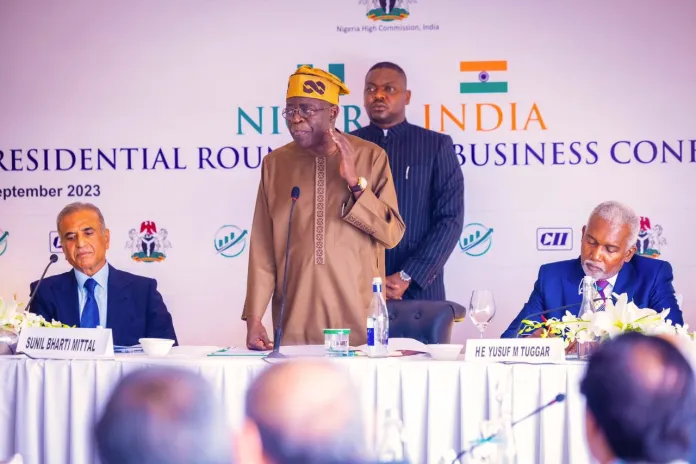
“Once more, President Tinubu,who is currently in India for the G20 Summit, thanks Nigerians for the mandate given to him to serve our country while promising to meet and exceed their expectations, by the grace of God Almighty, and through very diligent hard work with the team that has been put in place for that sole purpose'.

President Tinubu speaks after defeating Atiku,Obi at Election Tribunal

Gboyega Oyetola, Solomon Lalong, 17 others make Tinubu’s new ministerial list

The president, Asiwaju Bola Tinubu, has forwarded additional 19 names of ministerial nominees.

The Chief of Staff and the former Speaker of the House of Representatives, Femi Gbajamiabila has presented the new batch of ministerial list to the Senate.

The Rules of the chamber were suspended at 3:15 pm to allow for the Chief of Staff to enter the hallowed Red Chamber.

The nominees are: Ahmed Tijani Kwazo, Bosun Tijani, Dr Isiak Salako, Dr Tunji Alausa, Dr Yusuf Tanko Sununu, Adegboyega Oyetola, Atiku Bagudu, Bello Mattawale, Ibrahaim Gaidam, Simon Lalong, Lola Ade John,
Others are Dr Mariam Shetti, Prince Shuaibu Abubakar Audu, Prof Taye Mamman, Sen Sabi Abdullahi, Senator Alkali Ahmed Saidu, Senator Heineken Lokpobori, Uba Maigari Ahmadu and Zaphaniah Bitrus Jisalo.


Gboyega Oyetola, Solomon Lalong, 17 others make Tinubu’s new ministerial list
Image

Download Our Mobile App

Image
Image