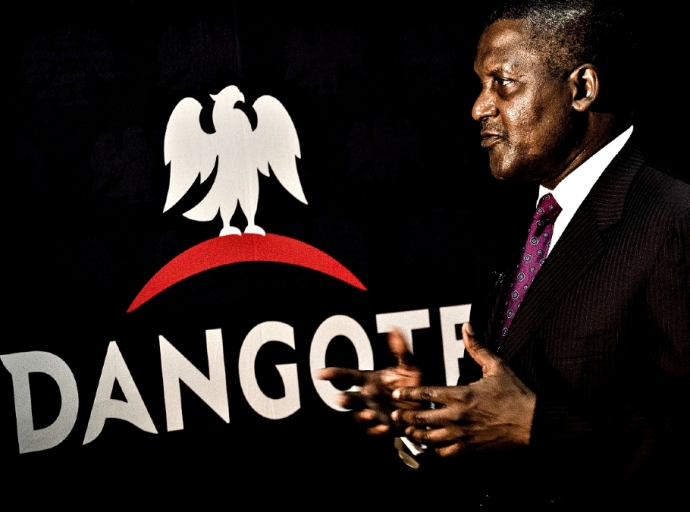
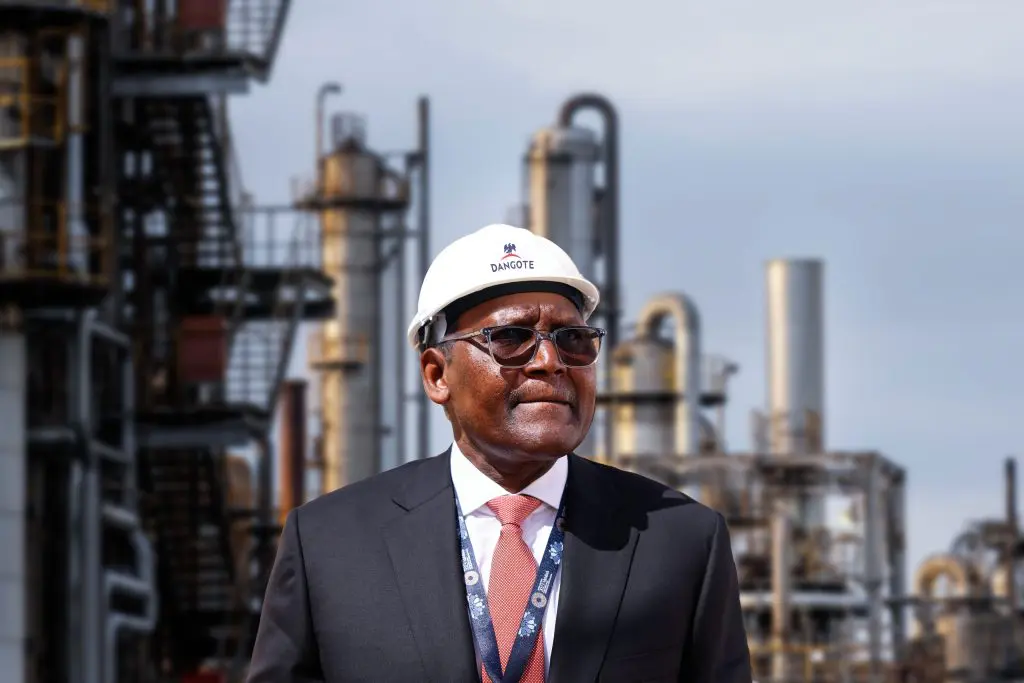
The Pan African Conglomerate Dangote Industries Limited, (Dangote Group), and its subsidiaries has disclosed that it paid over N402 billion in taxes in 2024, making it the highest taxpayer in the country.
Dangote’s Chief Branding and Communication Officer, Anthony Chiejina, declared during a meeting with some senior media executives who visited him in his Lagos Office that Dangote Industries Limited (DIL) and its subsidiaries, namely, Dangote Cement, NASCON, Dangote Packaging Limited among others, remitted a total of N402.319billion for the out-gone year as taxes as responsible business enterprises.
Recall that Federal Inland Revenue Service (FIRS) had in late 2024 recognised DIL and its subsidiary, Bluestar Shipping as the most tax compliant organizations in the country during its Special Day at the 2024 Lagos International Trade Fair organised by the Lagos Chamber of Commerce and Industry (LCCI).
The Federal Inland Revenue Service is Nigeria’s agency responsible for assessing, collecting and accounting for tax and other revenues accruing to the Federal Government of Nigeria.
Chiejina told his visitors that as a responsible business organisation, DIL and its subsidiaries have never shied away from its obligations either to the government in the form of tax payment at all levels or to host communities in the form of Corporate Social Responsibility (CSR).
According to him, the Group’s corporate strategy has evolved just as its businesses have grown, matured and diversified into new sectors and regions over the last four decades, noting that Dangote Group has almost single-handedly taken Nigeria to self-sufficiency in cement and refined petroleum products and is expanding rapidly across Africa.
Dangote Group and its and its subsidiaries, were recognised as number one most compliant in tax payment in the country, just as its subsidiary Dangote Cement, the country’s leading cement manufacturer, at another occasion won three awards at the FMDQ Gold Awards in Lagos as the most active business in the Foreign Exchange market.
Dangote Petroleum Refinery & Petrochemicals has slashed the price of Premium Motor Spirit (PMS), or petrol, for the second time this month. It has cut N65 off the previous price of N890, bringing it down to N825 per litre at the gantry (ex-depot). This follows a N60 reduction on February 1.
The ex-depot price has thus decreased from N950 per litre in January to the current price of N825 per litre, representing a reduction of N125 per litre within 26 days.
This recent price reduction will also ensure that Nigerians pay between N860 and N865 per litre for petrol at the pump in Lagos.
In a statement from the first privately owned petroleum refinery in Africa, it was announced that the price adjustment will take effect from Thursday, February 27, and is intended to provide essential relief to Nigerians.
"This strategic price adjustment is designed to provide essential relief to Nigerians in celebration of the Ramadan season, while also supporting President Bola Ahmed Tinubu’s economic recovery policy by alleviating the financial burden on the Nigerian populace.
"It is important to note that Dangote Petroleum Refinery has consistently lowered the prices of petrol and other refined petroleum products to the benefit of Nigerians. This marks the second reduction of PMS prices in February 2025, following a previous decrease of N60 earlier in the month. Additionally, in December 2024, during the yuletide period, the refinery reduced the price of PMS by N70.50, from N970 to N899.50 per litre, as part of its commitment to easing the cost of living and providing relief to Nigerians during the holiday season," the statement read.
The refinery highlighted that previous reductions have positively impacted the overall cost of living, benefiting various sectors of the economy. They also helped ensure that Nigerians did not experience the typical fuel scarcity and price hikes associated with the yuletide season.
Dangote reiterated that its high-quality products, which have become a favourite in both domestic and international markets, will remain available nationwide, particularly through its key partners—MRS Holdings, AP (Ardova Petroleum), and Heyden—at market-friendly rates.
"Nigerians will be able to purchase high-quality Dangote petrol at the following prices across our partners’ retail outlets: For MRS Holdings stations, it will be sold for N860 per litre in Lagos, N870 per litre in the South-West, N880 per litre in the North, and N890 per litre in the South-South and South-East regions, respectively.
"The same product will also be available at the following prices in AP (Ardova Petroleum) and Heyden stations: N865 per litre in Lagos, N875 per litre in the South-West, N885 per litre in the North, and N895 per litre in the South-South and South-East," it added.
Dangote Petroleum Refinery assured the public of a consistent supply of petroleum products, with sufficient reserves to meet domestic demand and a surplus for export, thereby boosting the country’s foreign exchange earnings.
The refinery called on marketers to support this initiative, ensuring that Nigerians remain the primary beneficiaries of this effort.
"This collective action will contribute to the broader economic recovery plan led by His Excellency, President Bola Ahmed Tinubu, who is committed to making Nigeria self-sufficient in refined petroleum products and positioning the country as a leading oil export hub," it concluded.
Dangote Petroleum Refinery, which has exported its products to Europe, America, Asia, and other regions, recently supplied jet fuel to Saudi Arabia. The refinery has confirmed it holds over 500 million litres of petrol in storage, enough to meet Nigeria's petrol demand for several days. Additionally, the refining capacity of the 650,000 barrel per day refinery has surpassed Nigeria's average daily requirement of 385,000 barrels.
The naira rose to N1,485 on the black market following improved dollar liquidity as foreign exchange policies support the naira.
This represents N15 gain over N1,500 per dollar quoted on the previous day in the parallel market also known as black market.
At the Nigerian Foreign Exchange Market (NFEM), the Naira appreciated as the dollar was quoted at N1,497.11 on Monday as against the previous close of N1,500.73, data from the FMDQ Securities Exchange Limited showed.
With the current rate exchange rate ga p has narrowed to N12 per dollar.
The CBN, through its various foreign exchange (FX) policies has achieved exchange convergence in the market. The official and parallel-market exchange rates for the naira converged for the first time in nearly two years on last week, according to data tracked by BusinessDay.
Olayemi Cardoso explained that following positive developments in the FX market, the CBN’s focus on boosting liquidity and maintaining transparency in forex operations is sacrosanct.
Nigeria’s central bank held its benchmark interest rate steady at 27.50% on Thursday, opting for stability after the rebasing of the consumer price index (CPI). The decision signals a cautious approach by Governor Olayemi Cardoso, who is balancing a need to lower inflation with the need to support an economy that is gradually winning back investor confidence.
The Monetary Policy Committee (MPC) voted unanimously to hold rates and said it assessed recent macroeconomic developments, including exchange rate stability and a gradual slowdown in fuel price increases, and decided that holding rates steady was the best course of action.
“The committee noted the recent rebasing of the Consumer Price Index (CPI) by the National Bureau of Statistics (NBS), which adjusted the weighting of items in the consumption basket to reflect current spending patterns,” said CBN Governor Olayemi Cardoso.
The rebasing, which updates the components used to measure inflation, lowered reported inflation rates, even though underlying price pressures remain high. Nigeria’s inflation stood at 34.48% in January before rebasing, but the updated methodology adjusted it to 24.48%.
The decision to hold rates was widely anticipated by analysts, who argued that further tightening could stifle business activity, while a premature cut might worsen inflationary pressures.
“Inflation is at an inflection point but could pick up again in a few months. The MPC will likely wait for at least three more months to assess the rebased numbers before making a major move,” said Basil Abia, an economist at Veriv Africa.
Since the start of 2024, the CBN has raised rates in an aggressive attempt to rein in inflation and stabilize the naira. This latest decision suggests the central bank is pausing to evaluate the impact of those hikes rather than committing to further tightening.
Despite the reported slowdown in inflation, businesses and consumers still face rising costs, particularly for food and imported goods.
With the next MPC meeting scheduled for May 2025, investors will be watching for signals on whether the CBN maintains its hawkish stance or shifts toward easing if inflation shows signs of further moderation.
Dangote Petroleum Refinery recently achieved a significant milestone by successfully exporting two jet fuel cargoes to Saudi Aramco, the world’s largest oil producer and a leading integrated oil and gas company globally.
Saudi Aramco is the official Saudi Arabian Oil Company, which is a majority state-owned petroleum and natural gas company that is the national oil company of Saudi Arabia.
President of Dangote Group, Aliko Dangote, revealed this on Tuesday during a visit by the Nigerian Economic Summit Group (NESG), team to both Dangote Fertiliser Limited and the Dangote Petroleum Refinery & Petrochemicals in Ibeju Lekki, Lagos.
Dangote said exporting products to the global markets, especially Saudi Aramco, was because of his refinery’s world-class standards and advanced technologies.
“We are reaching the ambitious goals we set for ourselves, and I’m pleased to announce that we’ve just sold two cargoes of jet fuel to Saudi Aramco,” he said.
Since its production began in 2024, the Dangote refinery has steadily increased its output, now reaching 550,000 barrels per day.
While commending Aliko Dangote for establishing the $20 billion refinery – the largest single-train refinery in the world – NESG Chairman, Mr. Niyi Yusuf, stated that Nigeria needs more investments of this calibre to reach its $1 trillion economy goal.
“To achieve a $1 trillion economy, much of that must come from domestic investments. I joked during the bus ride that while others are dredging to create islands for leisure, you’ve dredged 65 million cubic tonnes of sand to create a future for the country. This refinery, fertiliser plant, petrochemical complex, and supporting infrastructure are monumental,” he said. “My hope is that God grants you the strength, courage, and health to realise your ambitions and that in your lifetime, a new Nigeria will emerge.”
Yusuf emphasised that such local industries are essential to Nigeria’s industrialisation and will help foster the growth of Small and Medium Enterprises (SMEs). He added that the NESG would continue to advocate for an improved investment climate to attract entrepreneurs, boost development, ensure food security, and address insecurity.
He lamented that Nigeria has become a dumping ground for foreign products and stressed that the country must support its entrepreneurs to become a global player. “It’s inconceivable that a nation of over 230 million people, with an annual birth rate higher than the total population of some countries, is still dependent on imports to feed its citizens.”
Yusuf also praised Dangote’s bold vision for making Nigeria self-sufficient in several key sectors.
“The NESG is grateful, and I believe the nation is as well. This refinery represents the audacity of courage. It takes immense effort to do what you’ve done and still be standing and smiling. Thank you for inspiring us and showing that nothing is impossible. You’ve transformed Nigeria from a net importer of petroleum products to a net exporter,” he said. “We’ve all read Think Big, but this is truly about thinking big. The message is clear: the private sector can bring about real change.”
Yusuf, alongside NESG board members and stakeholders, toured the refinery and fertiliser plants, lauding the level of investment, technology, and sophistication of young Nigerian engineers running world-class laboratories and central control units. He acknowledged Dangote's perseverance and success in overcoming numerous challenges.
Dangote, in his response, reiterated the importance of the private sector in national development, asserting that Nigeria’s challenges could largely be overcome by providing gainful employment to its people.
He stated that the concept of a free market should not be used as a pretext for continued import dependence, highlighting that both developed and developing nations, including the USA and China, actively protect their domestic industries to safeguard jobs and promote self-sufficiency. Dangote also cited the example of the Benin Republic, where cement imports are restricted as part of a deliberate strategy to protect local industries, despite the proximity of his Ibese plant.
“The President is a personal friend, and my Ibese plant is just 28km from Benin, yet they refuse to allow imports to protect their local industries, most of which are grinding plants,” he remarked.
He further emphasised that the government stands to gain substantially when the private sector flourishes, noting that 52 kobo (52%) of every naira Dangote Cement generates goes to the government.
Dangote also pointed out the significant challenges involved, in setting up industries in Nigeria, particularly the substantial capital investment required due to the lack of infrastructure. He stressed that investors are often forced to take on responsibilities for essential services such as power, roads, and ports – services that should be provided by the government.
The Tony Elumelu Foundation (TEF) has officially opened applications for its 2025 entrepreneurship programmes, to give young Africans entrepreneurs skills to effectively manage their businesses.
This initiative invites aspiring and existing entrepreneurs from across Africa to apply for opportunities that include world-class training, expert mentoring, and non-refundable seed capital to scale their businesses.
In a statement released by the foundation, the 2025 training will include key programmes that would assist the young business owners’ navigate their industry terrain without experiencing any difficulties.
It noted that the window for application into the three programs for this year edition would be closing March 1, 2025, urging applicants to complete and submit their entries ahead of the deadline.
The foundation, meanwhile, warned that applicants below the age of 18 years would not be enrolled for the training, saying applicants age must not be less than 18 years old.
According to the statement, “Tony Elumelu Foundation (TEF) Entrepreneurship Programme: the flagship TEF Entrepreneurship Programme is open to all entrepreneurs across Africa with innovative business ideas or existing businesses not older than five years. This year, there is a special emphasis on businesses leveraging Artificial Intelligence (AI) and green initiatives. Applicants must be at least 18 years old.
“IYBA-WE4A Entrepreneurship Programme: Launched by the Tony Elumelu Foundation in partnership with the European Union (EU) and Deutsche Gesellschaft für Internationale Zusammenarbeit (GIZ), IYBA-WE4A stands for Investing in Young Businesses in Africa – Women Entrepreneurship for Africa and is exclusively for women entrepreneurs with green business ideas or existing green businesses in Senegal, Tanzania, Uganda, Cameroon, Kenya, Mozambique, Malawi, and Togo. Applicants must be at least 18 years old, with businesses not exceeding five years in operation.
“Aguka Ideation Programme: The Aguka Ideation Entrepreneurship Programme is a partnership with the Tony Elumelu Foundation, UNDP Rwanda and the Rwandan Ministry of Youths and Arts to support young Rwandan entrepreneurs between 18 -30 with business ideas with a seed capital of $3000, with the aim of nurturing and developing innovative concepts into viable enterprises”.
Application Details:
• Platform: Applications are to be submitted through TEF’s proprietary digital hub, TEFConnect.
• Application Period: January 1, 2025 – March 1, 2025. Applicants are encouraged to complete and submit their applications well ahead of the deadline.
• Eligibility: Open to African entrepreneurs with scalable business ideas or existing businesses not older than five years. Applicants must be at least 18 years old.
To learn more about the Tony Elumelu Foundation’s transformative work and the success of our African entrepreneurs. Explore our:
• Impact Report, which highlights the Tony Elumelu Foundation’s achievements and contributions to Africa’s economic growth.
• African Entrepreneurs’ Success Stories, showcasing the inspiring journeys of Tony Elumelu Entrepreneurs.
• Annual Reports, offering insights into the Tony Elumelu Foundation’s strategies and outcomes.
The Tony Elumelu Foundation is the leading philanthropy empowering a new generation of African entrepreneurs, driving poverty eradication, catalysing job creation across all 54 African countries, and increasing women economic empowerment.
Founded in 2010, the Tony Elumelu Foundation is committed to empowering African entrepreneurs as a catalyst for the continent’s economic transformation.
Since the launch of the TEF Entrepreneurship Programme in 2015, the Foundation has provided up to 2.5 million young Africans with access to training on its digital hub, TEFConnect, and disbursed over USD$100 million in direct funding to over 21,000 African women and men, who have collectively created over 800,000 direct and indirect jobs, and generated over USD$4.2 billion in revenue. The Foundation’s mission is rooted in Africapitalism, which positions the private sector, and most importantly entrepreneurs, as the catalyst for the social and economic development of the African continent.
Guaranty Trust Holding Company Plc,is pleased to announce the successful completion of the first tranche of its equity capital raise programme, following the completion of the
capital verification exercise conducted by the Central Bank of Nigeria (CBN) and the approval of the Basis of Allotment of the Offer by the Securities and Exchange Commission (SEC). The Offer, which garnered substantial interest from domestic retail investors, raised a total of ₦209.41 billion from 130,617 valid applications for 4,705,800,290 Ordinary
Shares, fully allotted. This milestone concludes the first phase of GTCO’s phased equity capital raise programme, which is structured on a balanced allocation strategy based on
an equal split between institutional and retail investors. This balanced approach aligns with GTCO Plc’s commitment to fostering a well-diversified and robust investor base.
Commenting on this phase of the recapitalization exercise, Segun Agbaje, Group Chief Executive Officer of GTCO Plc, expressed his gratitude: “We extend our sincere
appreciation to our new and existing shareholders, as well as the regulatory authorities, for their unwavering support during this initial phase of our equity capital raise. The
strong participation and successful capital verification exercise and allotment process reaffirm the confidence investors have in our fundamentals and execution capabilities.
This sets a solid foundation for accelerating our strategic roadmap, which aims to pivot the Group for transformational growth and unlock greater value across the Group’s
Banking and Non-Banking businesses.”
GTCO Plc continues to lead its peers in key profitability metrics and financial performance. Building on this successful first phase, the Group will commence the second phase of its recapitalization plan in 2025, which is strategically positioned to attract significant foreign institutional investments, reinforcing its reputation as a Truly
International financial services brand. Proceeds from the combined equity raise will be strategically deployed to recapitalize the Group’s flagship subsidiary, Guaranty Trust Bank Limited (GTBank Nigeria), enhancing its ability to meet regulatory requirements and further solidify its position as a leading financial institution. Additionally, the funds will support Group-wide growth initiatives, including footprint expansion, product enhancement, and innovation across both Banking and Non-Banking subsidiaries. GTCO remains committed to delivering sustainable value to its stakeholders and driving innovation across the financial services landscape in Africa.
n a landmark move for regional energy integration, Dangote Refinery and Neptune Oil jointly announced the first-ever export of Premium Motor Spirit (PMS) from Dangote Refinery, Africa's largest oil refinery, to Cameroon.
This milestone, resulting from a strategic collaboration between the two companies, underscores their commitment to strengthening economic ties between Nigeria and Cameroon while meeting the region's growing energy demands… Alhaji Aliko Dangote, President and CEO of the Dangote Group, stated: “This first export of PMS to Cameroon is a tangible demonstration of our vision for a united and energy-independent Africa. With this development, we are laying the foundation for a future where African resources are refined and exchanged within the continent for the benefit of our people.”
Antoine Ndzengue, Director and Owner of Neptune Oil emphasized: “This partnership with Dangote Refinery marks a turning point for Cameroon. By becoming the first importer of petroleum products from this world-class refinery, we are bolstering our country’s energy security and supporting local economic development. This initial supply, executed without international intermediaries, reflects our commitment to serving our markets independently and efficiently.”
The collaboration between Dangote Refinery and Neptune Oil does not end with this first export. Both companies are exploring new initiatives to establish a reliable supply chain that will help stabilize fuel prices and create new economic opportunities across the region.
The Ogun State Chamber of Commerce, Industry, Mines, and Agriculture (OGUNCCIMA) has praised the monumental contributions of Dangote Refinery to Nigeria’s economy and its role in revitalizing the private sector. This flagship industrial project has not only reshaped the country’s energy landscape but has also created opportunities for private enterprises and driven sustainable economic growth.
Speaking on behalf of OGUNCCIMA, it's President Lion Niyi Oshiyemi, lauded the refinery’s achievements, emphasizing its transformative impact on key economic sectors.
“The Dangote Refinery is a game-changer for Nigeria’s economy. With a capacity to refine 650,000 barrels of crude oil daily, it has reduced Nigeria’s reliance on imported petroleum products, conserved foreign exchange, and fortified our energy security. This milestone reinforces the critical role the private sector plays in national development,” he stated.
The impact of Dangote Refinery on the private sector is profound. By creating thousands of direct and indirect jobs, the refinery has stimulated economic activities across multiple industries. From manufacturing to logistics, the project has provided businesses with opportunities to grow and innovate.
“The refinery’s operations have created employment for Nigerians at all levels while fostering technology transfer and skills acquisition. This has strengthened local businesses and equipped them with the tools to compete in domestic and global markets,” Oshiyemi noted.
The emphasis on local content has been a cornerstone of Dangote Refinery’s strategy. By sourcing materials locally and partnering with indigenous companies, the refinery has supported the growth of Nigerian enterprises and encouraged investments in infrastructure, engineering, and technology.
The ripple effects of the Dangote Refinery extend beyond the energy sector. Its presence has catalyzed industrialization by attracting investments in related sectors such as petrochemicals, manufacturing, and transportation. This multiplier effect has significantly expanded Nigeria’s industrial base and enhanced the nation’s economic competitiveness.
OGUNCCIMA also highlighted the refinery’s contributions to addressing Nigeria’s balance of trade challenges. By producing refined petroleum products domestically, the refinery has reduced the need for costly imports while positioning Nigeria as a potential exporter of refined products within the African continent.
The impact of Dangote Refinery goes beyond Nigeria’s borders, as it addresses Africa’s critical energy deficits and trade imbalances. By meeting the energy demands of neighboring countries and promoting intra-African trade, the refinery aligns with the objectives of the African Continental Free Trade Area (AfCFTA).
“This refinery is a shining example of what can be achieved through visionary leadership and investment in strategic sectors. It demonstrates Africa’s potential to compete globally and foster regional integration,” Oshiyemi remarked.
In addition to its economic contributions, Dangote Refinery has maintained a strong commitment to corporate social responsibility. The Dangote Group’s investments in education, healthcare, and infrastructure have improved the quality of life for many Nigerians and strengthened community resilience.
“Dangote Refinery exemplifies the role of private sector enterprises in driving social progress alongside economic development. Its initiatives in healthcare and education are building a brighter future for Nigerians,” Oshiyemi added.
OGUNCCIMA urged stakeholders across public and private sectors to emulate the Dangote Refinery’s innovative approach to development. By fostering partnerships and investing in transformative projects, Nigeria can achieve sustainable economic growth and reduce its reliance on external resources.
“This refinery stands as a model for what is possible when the private sector leads with vision and commitment. We call on all stakeholders to collaborate and replicate such success stories to build a resilient, self-reliant, and prosperous Nigeria,” Oshiyemi concluded.
It would be recalled that Dangote Refinery recently slashed the price of its petrol to N970 per litre to oil marketers, while assuring that further reduction is still possible in a foreseeable future.