

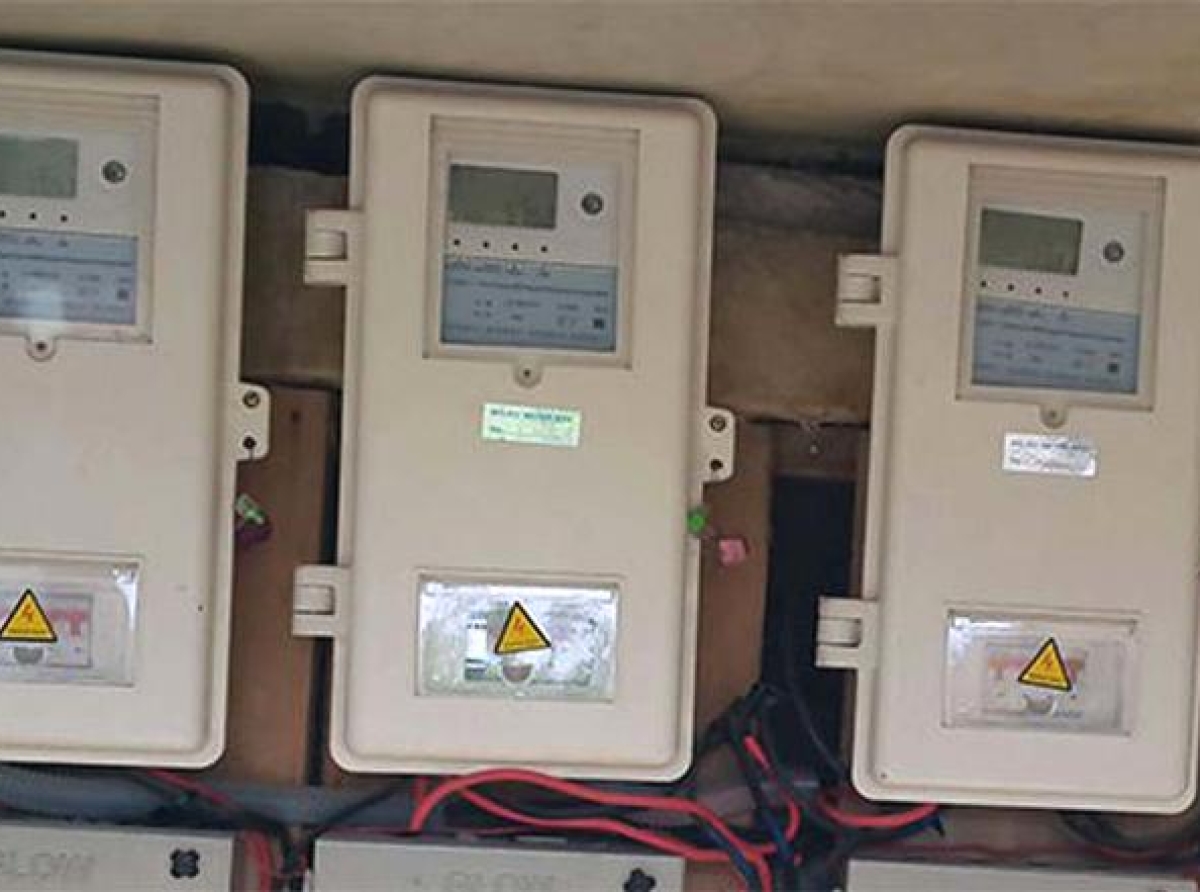
Nigerians has generally rejected the Nigerian Electricity Regulatory Commission’s reduction of the tariff payable by Band A customers from N225/kWh to N206.8/kWh.
The Nigeria Labour Congress, Trade Union Congress, Nigerian Association of Chambers of Commerce, Industry, Mines and Agriculture, electricity consumers and civil society organisations, in separate moves, demanded a reversal of the hike to the subsidy era tariff.
The new tariff announced on Monday came 33 days after the NERC raised the electricity tariff for Band A customers from N68/kWh to N225/kWh, representing about a 240 per cent increase.
Subsidy on electricity was withdrawn completely from the tariff of consumers in the Band A category, which constitutes about 15 per cent of the total 12.82 million power consumers across the country.
Based on the tariff hike, the Federal Government said it would save N1.5tn.
The government stated that the decision took effect from April 3, 2024, adding that Band A customers would enjoy up to 20 hours of power supply daily.
However, the House of Representatives, organised labour and the Nigerian Bar Association kicked against the hike in tariff payable by about 1.9 million consumers.
The House of Representatives called on the NERC to suspend forthwith the implementation of the new electricity tariff nationwide, while organised labour issued a two-week ultimatum demanding the reversal of the tariff hike.
Still, the Minister of Power, Adebayo Adelabu defended the increase during an investigative hearing held by the Senate Committee on Power last week, insisting that there would be a nationwide blackout in the next three months if the increase in electricity tariff was not implemented.
However, NERC in a statement announcing the eight per cent reduction for band A customers said this was a result of changes in macroeconomic indices in April, especially the appreciation of the naira against the dollar in the foreign exchange market.
The commission noted that the decision came after a thorough review of the macroeconomic parameters and exchange rate appreciations.
In response to the NERC’s order, the Abuja, Ikeja, and Ibadan electricity distribution companies among others, announced a reduction in their tariffs, accordingly.
The Ikeja Electricity Distribution Company in a notice said, “Dear esteemed customers, please be informed of the downward tariff review of our Band A feeders from N225/kWh to N206.80/kWh effective 6th May 2024 with guaranteed availability of 20-24hrs supply daily. The tariff for Bands B, C, D, and E remains unchanged”.
Also, the Ibadan DisCo informed its customers about the tariff slash, saying, “Customers using prepaid meters will be the first to experience the revised tariff – N206.80/kWh whenever they vend this month of May. While for post-paid customers, the revised tariff will reflect in the electricity bills to be received at the end of May 2024”.
Similarly, the Port Harcourt DisCo as well as its Eko, Abuja, Kano and Kaduna counterparts said they had all implemented the tariff slash to reflect the new order.
The NERC expressed its dedication to maintaining a regulatory environment that balances the interests of the consumers with the sustainability of the electricity supply industry.
It said the tariff reduction was part of its ongoing efforts to ensure that electricity remained affordable for Nigerians while also encouraging efficiency and improvement in service delivery by the distribution companies.
The Co-Convener, Situation Room, James Ugochukwu, suggested that merely reducing electricity tariffs would not address the root issue, advocating instead for the government to tackle energy problems comprehensively, ensuring adequate fuel and diesel supply, and empowering states to develop their independent power sources.
Ugochukwu said, “A caring government should be more concerned about the plights of its people given the pronouncement they made on May 29, 2023, when they took over people.
“Nigerians are battling with high fuel prices and now a hike in electricity tariffs. We are groaning under the increasing cost of living.
The Band A consumers which are the manufacturers are finding it difficult to break through in their businesses which is affecting the cost of living in the country.
“Reducing the electricity tariff will not change anything. The Federal Government should fix the issue of energy so that Nigeria can have enough fuel and diesel to power its operations. They should also empower other states to see how they have their own independent power plants.”
Also, the Coordinator of the Atulunse Initiative, Olaseni Shalom, expressed concern about the dire situation in the country and urged the government to prioritize finding solutions to the economic crisis.
Shalom emphasised the importance of focusing on domestic production and attracting investments to stimulate economic growth.
He noted, “What is happening in the power or energy sector is the same issue that is affecting all the critical sectors of the economy which is as a result of hyperinflation. It is a terrible situation that we are in the country.
“What Nigerians need to do now is to put pressure on our government to find solutions to the economic situation we are going through. They need to focus on our productions. We need investments in the country.”
The Executive Director of YouthHub Africa, Rotimi Olawale, noted that the government had been unable to ensure a regular supply of electricity or provision of subsidies in the sector, adding that the inability to pay the increased tariffs should be considered a human right.
“The government has shown that it is unable to provide or run any subsidy programme, electricity subsidy, effectively and efficiently, and also continue to provide optimum services.
“That is something that has become very obvious, and if we want private sector investment in the electricity sector, the pricing must be such that it remains attractive for them to recoup their investment. So, in some ways, I support pricing that allows investment to come into the sector.’’
‘Total reversal impossible’
But the minister of power’s Special Adviser on Media and Communication, Bolaji Tunji, maintained that the major problem of the industry was liquidity and that could only be addressed with a cost-reflective tariff.
He argued, “If people are now saying there should be a total reversal of the tariff, then we don’t want the industry to survive because money has to be paid to the gas companies. This money can only come from whatever is generated.
“Can the government afford over N2tn to pay subsidies yearly? No! What about the legacy debt and the current debt? These are the concerns being raised. The debts are affecting the industry seriously.’’
Speaking further, he said, “If you now say they should reverse this tariff, no, they cannot reverse it, unless we want to continually be in darkness; because the investors will pack up, and they won’t be able to sustain their businesses.’’
“It will take us back to where we were before. If people say we should go back to the status quo, it means we don’t want the industry to thrive. If we want the sustenance of this sector, people have to pay,” he stressed.
He noted that the pricing of gas in dollars has been a major concern for the ministry, saying, however, that gas in the international market is denominated in dollars.
He said the minister had met with the Minister of State for Petroleum (Gas), Ekperipke Ekpo, seeking how to ensure gas supply gets to the power generating companies seamlessly to avert the problem of gas shortages.
“We are looking at how we can have a sustained gas supply to the GenCos. The meeting with the gas minister is still ongoing to solve the issue of gas,” he submitted.
On his part, the President of the Lagos Chamber of Commerce and Industry, Gabriel Idahosa, described the development as a gradual maturing of the electricity market which could spark further price reviews in the foreseeable future.
According to him, the decision by the NERC to re-evaluate its earlier stance might not be unconnected with a fundamental shift in the consumption patterns of electricity consumers since the new tariff was announced.
Idahosa said, “It is a gradual maturing of the electricity market. NERC has deregulated the market. So, each market can now determine its price. Eko Disco can determine their prices; Ikeja Electric can determine their prices.
“Each operator will look at their local market and see the level of efficiency and look at the pricing that can bring them more money because they have looked at the N225 price and found that a lot of people are no more comfortable consuming energy like before.”
Meanwhile, the Chairman of the Nigerian Economic Summit Group, Mr. Niyi Yusuf, said that the adjustment by the NERC was timely and a welcome development.
“The appreciation in forex rates is what NERC gave for the slight reduction. While this adjustment by NERC is timely and welcome, it is important to note that the industry needs an appropriate tariff that will sustain investments and operations in both the short and long term. This is the hard work that needs to still be done,” Yusuf submitted.
He reiterated the need to get appropriate tariffs that would sustain investments and operations in both the short and long term.
“I would rather we focus on getting appropriate tariffs that will sustain investments and operations in both the short and long term. At the N206 per kilowatt, and if available, it should help to reduce the average power cost for most enterprises based on a power mix of different sources, including generator, solar, gas, public grid among others,” he pointed out.


