Sun, Feb 1, 2026

Fuel’ll be available by weekend, Petroleum Minister tells Nigerians after meeting Vice President Shettima


The Minister for Petroleum Resources, Heineken Lokpobiri, has said that it is expected that there will be availability of Premium Motor Spirit, otherwise known as petrol, by the weekend.

The Minister stated this following a meeting with the Vice President, as well as the Managing Director and Chief Executive Officer of the Nigerian National Petroleum Company Limited, Mele Kyari, and the Executive Director of the Nigerian Midstream and Downstream Petroleum Regulatory Authority, Mugo Okuoha, at the State House on Thursday.

Lokpobiri said the meeting was at the instance of President Bola Tinubu, who he said was concerned about the hardship being faced by Nigerians

He urged Nigerians to desist from panic buying, stating that the government was not fixing prices and the prices would stabilize as soon as the product was made available.

He said, “What is important is for us to convey to Nigerians that the President is empathetic about what is going on in the country. He is concerned about the hardship of Nigerians, and that was why he directed the Vice President to call this meeting, for us to reflect on what is going on in the country.

“What is important is that products are available in the country, and we believe that between now and the weekend, there will be availability of products across the length and breadth of the country.

“The price could be high in some other areas, much higher in some other locations, and in some locations, much more than you know other areas. But we believe that by the time there is availability of products across the country, the price itself is stabilised (sic).”

He added that the government does not fix prices in a deregulated sector, and they believe prices will stabilize with the availability of products.

“There is enough product in the country to be able to meet the demands of Nigerians, there should be no panic buying. And we also believe that Nigerians need to know that the government is not fixing prices. That is what I want to convey to Nigerians,” he stated.

The Executive Director of the NMDPRA, Mugo Okuoha also told State House correspondents that regulatory efforts were now geared towards stabilizing supply, with a resultant impact on price stability.

He added that to achieve the objective, the NMDPRA had ensured increased operating hours at loading depots and that vessels were being cleared promptly.

“All regulatory efforts are now geared towards stabilizing supply, with a resultant impact that it will be positive also on the stability of price”.

“To that objective, the regulator is ensuring that there are increased operating hours from all loading depots, vessels are being cleared promptly, and extended hours where safety can permit, for truck outs as well.

More important also is the reinforcement of the support being given to local refinance, because with increased production from them, indeed, as the minister has said, there will be higher supply, which will stabilize the price. That’s the effort that the regulator is making”, he concluded.

Fuel’ll be available by weekend, Petroleum Minister tells Nigerians after meeting Vice President Shettima

Petrol scarcity set to worsen as NNPCL admits $6bn debt

There are indications that the pump price of premium motor spirit, popularly known as petrol, may rise in filling stations as the Nigerian National Petroleum Company Limited finally admitted that it was facing challenges due to a $6bn debt.

After weeks of denial, the NNPC admitted on Sunday that it owed its petrol suppliers the sum of $6bn, saying it was facing financial strains due to petrol supply costs.

In a statement by its Chief Corporate Communications Officer, Olufemi Soneye, the state-owned energy company subtly confirmed that the debt was the reason for the fuel queues in filling stations across the country, stating that it is impacting supply sustainability.

The PUNCH reported in July that Nigeria’s debt to suppliers of petrol surpassed $6bn, making the NNPC struggle to cover the gap between fixed pump prices and international fuel costs.


A Reuters report stated that the national oil company began struggling early this year when late PMS payments surpassed $3bn.

The company had still not paid for some January imports, traders said, and the debt keeps piling up. Under contract terms, NNPC is meant to pay within 90 days of delivery.

“The only reason traders are putting up with it is the $250,000 a month (per cargo) for late payment compensation,” one industry source said.

Since June, Nigeria’s tenders to buy PMS were smaller, traders said.

From two in July, three more traders were said to have stopped supplying PMS to the NNPC as of now, making a total of five unpaid traders.

But Soneye, in August, denied that the NNPC owed international oil traders $6.8bn.

“NNPC Ltd does not owe the sum of $6.8bn to any international trader(s). In the oil trading business, transactions are carried out on credit, so it is normal to have outstanding amounts at certain times. However, NNPC Ltd, through its subsidiary NNPC Trading, maintains many open trade credit lines with several traders. The company is fulfilling its obligations on a first-in-first-out basis,” he stated.

The NNPC has given various reasons for the lingering fuel crisis, including bad weather and the inability of vessels to discharge, among others, but none of the measures it has taken stopped the queues at the filling stations.

On Sunday, the company made a U-turn in admitting that it was facing financial constraints.

“NNPC Ltd has acknowledged recent reports in national newspapers regarding the company’s significant debt to petrol suppliers.


“This financial strain has placed considerable pressure on the company and poses a threat to the sustainability of fuel supply,” Soneye said in a statement titled, ‘NNPC Ltd Faces Financial Strain Due to PMS Supply Costs, Impacting Supply Sustainability.’

He added that the company was collaborating with relevant government agencies and other stakeholders to maintain a consistent supply of petroleum products nationwide.

“In line with the Petroleum Industry Act, NNPC Ltd remains dedicated to its role as the supplier of last resort, ensuring national energy security.

“We are actively collaborating with relevant government agencies and other stakeholders to maintain a consistent supply of petroleum products nationwide.”

As Nigerians continue to complain over the lingering fuel crisis since July, the sudden admission by the NNPC of a claim it had severally denied, fuelled speculations that the Federal Government might stop paying what it termed “under-recovery” or shortfall on imported petrol.

The PUNCH learnt that the company might be contemplating taking the only way out of the debt challenges, which was to stop paying shortfalls that might no longer be sustainable.

When this happens, operators said the price of petrol would rise above N1,000 and interested accredited marketers would be able to import petrol, thereby removing the NNPC monopoly.

FG pays subsidies

Recently, the NNPC, being the sole importer of petrol, admitted that the Federal Government subsidised the current price of PMS, which the marketers recently put at N1, 117 per litre.

Though the NNPC denied paying fuel subsidies to marketers in the last nine years, it said the government allowed it to sell at a price below the landing cost.

The Chief Financial Officer of the company, Alhaji Umar Ajiya, stated this in Abuja when the company presented its 2023 report.

“In the last eight to nine years, NNPC has not paid anybody a dime as subsidy; no one has been paid a kobo by NNPC in the name of subsidy. No marketer has received any money from us by way of subsidy.

“What has been happening is that we have been importing PMS, which has been landing at a specific cost price, and the government tells us to sell it at half price. So, the difference between the landing price and that half price is a shortfall.

“And the deal is between the Federation and NNPC to reconcile. Sometimes, they give us money, so there is no money exchanging hands with any marketer in the name of subsidy,” he said.


He stated that credit lines were prevalent in downstream businesses based on the worldwide commercial system.

He added that the company was in an open credit agreement with PMS suppliers in the past, with term-line contracts for payment.

Also, Dapo Segun, the Executive Vice President of Downstream at NNPCL, said that establishing an open credit agreement with suppliers spoke volumes about the credibility the national oil company had built over time.

“Concerning the outstanding to the suppliers, it is not in that magnitude that has been put out, it is lower than the $6.8bn

“What really matters is the relationship between us and our suppliers to ensure that we keep faith in making these payments to our suppliers, which we have done over time.

“You would understand that it is not a static figure, and I wouldn’t want to quote any figure. When we make payments, it goes down, and when they supply products, it goes up. It is a dynamic way, but the most important thing is to ensure that we continue to make PMS available across the country,” he said.

According to the NNPC, being the only importer of petrol, the Federal Government pays it to sell fuel to Nigerians at a subsidised rate.


However, this has led to incessant fuel scarcity across the nation as the debt to the international oil companies keeps piling up.

On May 29, 2023, President Bola Tinubu, announced that the fuel subsidy was gone.

However, with the floating of the naira, the price of imported petrol rose above the purchasing power of an average Nigerian, causing the Federal Government to intervene by capping the price below the landing cost and paying the shortfall.

The failure of the Federal Government to pay the shortfall is impacting fuel importation.

In May, the International Monetary Fund warned the Nigerian government to remove what it called implicit fuel and electricity subsidies.

In a report published by the IMF, the organisation told Nigeria that the subsidies would guzzle 3 per cent of the nation’s Gross Domestic Product in 2024 as against 1 per cent in the year before.

According to the report, the IMF commended the Federal Government for, among other things, phasing out “costly and regressive energy subsidies”, saying this was critical to creating fiscal space for development spending and strengthening social protection while maintaining debt sustainability.


IMF noted after Tinubu removed subsidy, “adequate compensatory measures for the poor were not scaled up in a timely manner and subsequently paused over corruption concerns. Capping pump prices below cost reintroduced implicit subsidies by end-2023 to help Nigerians cope with high inflation and exchange rate depreciation”.

It appears the Federal Government is now ready to heed the advice of the IMF.

‘Partial deregulation killing’

The National Vice Chairman of the Independent Petroleum Marketers Association of Nigeria, Hammed Fashola, has charged the government to either return the fuel subsidy or remove it totally instead of engaging in partial deregulation.

“The Federal Government and the NNPC should just do this thing once and for all. If they want to deregulate, let them deregulate fully, because we know where we are going; that’s why you’re seeing this disparity whereby the NNPC retail is selling at N580 in Lagos and independent marketers will be selling at N800. You can see the gap. It’s killing our business, we are not making progress; it’s killing us.

“If the Federal Government wants to bring back the subsidy, let them bring it back fully so that everybody will know that we are on subsidised product; and it should cut across, not just for NNPC Retail. So, we will know that we are back to the subsidy regime which I don’t think is good for the economy of the country,” Fashola emphasised.

He stated that the price disparity is not good for the image of independent marketers, saying the masses do not understand why they sell at higher rates.

“If not that we are trying to educate people, many see us as bad people, they didn’t know it’s not our fault,” he posited.

The IPMAN leader added that the fuel crisis was because the NNPC has remained the only importer of PMS.

“The problem is that it’s only the NNPC that can bring this product because of forex. They are the only ones selling. Two or three independent marketers once tried to import, but they could not,” he stated.

The marketers submitted, “We need to brace up and face the reality once and for all. If the subsidy should go, let it go so that all of us will be operating on a level playing ground. That’s what we are asking for, not that NNPC Retail will be favoured and others will be suffering, and people will be seeing us as Shylock businessmen; it is not too good,” Fashola stressed.

As the fuel crisis lingers for about two months, our correspondent observed that the price keeps rising in filling stations owned by independent marketers.

From less than N700 in July, a litre of petrol rose gradually to above N900 in most filling stations in August ending. The upward trend continues with no successful attempt to stop it as of today.

“I just bought a litre of petrol for N980 in Ogere,” a visibly angry bus conductor told a passenger negotiating transport fare along the Lagos-Ibadan Expressway.


In filling stations being run by major marketers like NNPC Retail, Mobil, MRS, Conoil, Ardova, and TotalEnergies, the product sells below N700, but with long queues of motorists struggling to buy fuel.

It was also observed during the weekend that many of these major marketers, including the NNPC, run skeletal services due to inconsistent fuel supply.

The NNPC spokesman, Olufemi Soneye, told The PUNCH on different occasions that the queues being experienced in fuel stations across the country would be over in a few days.

However, the promises have continued to fail, leaving Nigerians in the struggle for energy security, especially in the transport sector.

Meanwhile, a depot operator told our correspondent that the desperation of marketers to get PMS should be blamed for the rise in price.

The operator, who did not want his name in print, told The PUNCH that many of the marketers struggle to outplay one another and are ready to buy at any price for they know they can sell at a higher price to make a profit.

Nonetheless, the operator submitted that the lack of enough supply is responsible for the desperation, saying a number of depots have been out of stock for weeks.


“Most time it is not the depot owners that hike the price, but the marketers struggling to outplay each other at the depots,” the source stated.

Our correspondent learnt that some individuals who act as middlemen between the depots and the filling stations sell to the highest bidders only, leaving out those who could not afford the bidding.

These middlemen, it was learnt, make profits just by negotiating prices with the filling stations through phone calls.

Meanwhile, another depot source told our correspondent that loading of fuel has improved during the weekend, expressing optimism that things would improve this week.

“Loading was better over the weekend. It is expected that the supply will get better. We loaded from Saturday till Sunday. We are hopeful the fuel situation will improve this week,” the source disclosed.

However, our correspondent reports that the purported improved loading of fuel has not been felt by Nigerians who still pay higher rates to buy fuel.

Findings have shown that cost of transportation had risen by almost 40 per cent, depending on the destination.

There are indications that the pump price of premium motor spirit, popularly known as petrol, may rise in filling stations as the Nigerian National Petroleum Company Limited finally admitted that it was facing challenges due to a $6bn debt.

After weeks of denial, the NNPC admitted on Sunday that it owed its petrol suppliers the sum of $6bn, saying it was facing financial strains due to petrol supply costs.

In a statement by its Chief Corporate Communications Officer, Olufemi Soneye, the state-owned energy company subtly confirmed that the debt was the reason for the fuel queues in filling stations across the country, stating that it is impacting supply sustainability.

The PUNCH reported in July that Nigeria’s debt to suppliers of petrol surpassed $6bn, making the NNPC struggle to cover the gap between fixed pump prices and international fuel costs.

A Reuters report stated that the national oil company began struggling early this year when late PMS payments surpassed $3bn.

The company had still not paid for some January imports, traders said, and the debt keeps piling up. Under contract terms, NNPC is meant to pay within 90 days of delivery.

“The only reason traders are putting up with it is the $250,000 a month (per cargo) for late payment compensation,” one industry source said.


Petrol scarcity set to worsen as NNPCL admits $6bn debt

N600?Litre! Dangote debunks Marketers projection....Says We have not fixed petrol price

The Dangote Group has denied reports of a planned increase in petrol price to N600/litre, as attributed to the Independent Petroleum Marketers Association of Nigeria (IPMAN).

In a statement released on Tuesday, Anthony Chiejina, Group Chief Branding and Communications Officer, clarified that IPMAN is not a business partner of Dangote Refinery and has no authority to speak on its behalf.According to the statement, '

We have not fixed Petrol Price

Our attention has been drawn to headlines announcing “Marketers Project N600/litre for Dangote Petrol” published in Punch Newspapers of Tuesday August
13,2024. We would like to clarify that Independent Petroleum Marketers Association of Nigeria (IPMAN) is not our business partner yet. We have never discussed price of Premium Motor Spirit (PMS) with them, and they have no mandate or authority to speak for us, either for good or with hidden transcript.
We urge the public to desist from such speculative announcements. We have our official channels through which we make our views known to our stakeholders.

Anthony Chiejina,
Group Chief Branding and Communications Officer
13th August, 2024

N600?Litre! Dangote debunks Marketers projection....Says We have not fixed petrol price

Canadian police arrest Nigerian woman,Amaka Sonnberger who threatened to poison Yorubas, Benins


The police in Canada have arrested the Canada-based Nigerian woman, Amaka Sonnberger, who threatened to poison Yoruba and Benin people living in the North American country.

The Toronto Police Service, Canada, said Ms Sonnberger, 46, was arrested on Sunday and that she has been charged with uttering threats.


“She is scheduled to appear at the Ontario Court of Justice, 2201 Finch Avenue West on Monday, September 2nd, 2024, at 10:00 a.m. in courtroom 107,” the Toronto Police said in a statement published on their website on Sunday.

“This investigation is being treated as a suspected hate-motivated offence,” the police said, adding that those who wish to volunteer information on the case should contact them.

“When suspected hate-motivated offences are reported to police, the investigation could be led by a Divisional investigator with the support of the Hate Crime Unit (HCU), or in some cases, will be investigated exclusively by the HCU.


“If it is alleged a criminal offence was committed (such as assault or mischief) and it is believed to have been motivated by bias, prejudice or hate, the officer-in-charge may consult with the Crown. If a person is charged and convicted of the offence, the Judge will take into consideration hate as an aggravating factor when imposing a sentence.

“Wilful promotion of hatred and advocating genocide are hate propaganda (hate speech) offences which require the Attorney General’s consent to lay charges. These charges are often laid at a later time,” the statement said.


Background

If you recall, Abike Dabiri, the chairperson of a federal agency, Nigerians in Diaspora Commission, disclosed the identity of Ms Sonnberger after a video where she allegedly made the threat surfaced on X.

“Record me very well; it’s time to start poisoning the Yoruba and the Benin. Put poison for all una food for work. Put poison for una water, make una dey kpai one by one,” Ms Sonnberger said in what appears to be a virtual meeting on TikTok.


The woman vowed that she would take poisonous substances to her workplace and poison any Yoruba or Benin person she came across.

She claimed that her comment was in response to the “hate” against the Igbo. Some other voices could be heard, interjecting and prodding her.

It is, however, unclear how many people attended the virtual meeting with her.

“I want make Ndi Igbo get that heart of wickedness. Una too dey quiet,” the woman said, addressing other participants. “Enough is enough! If you have any means of kpaing them, kpai them commot for road.”

Canadian police arrest Nigerian woman,Amaka Sonnberger who threatened to poison Yorubas, Benins

US donates 10,000 monkeypox vaccine doses to Nigeria


The United States government donated 10,000 doses of the Jynneos vaccine to Nigeria to aid in the fight against monkeypox on Tuesday.

The Jynneos vaccine, approved by the U.S. Food and Drug Administration, is designed to prevent smallpox and monkeypox in adults aged 18 and older who are at risk of infection.


During the official handover ceremony in Abuja, Prof. Muhammad Pate, the Coordinating Minister of Health and Social Welfare, expressed gratitude to the U.S. government for the generous donation.Represented by Permanent Secretary Daju Kachollom, Pate emphasised the Federal Government’s commitment to improving public health in Nigeria.

He said, “This is a spirit of cooperation and collaboration through the years, and this vaccine will be of great help to us.


“The Federal Ministry of Health understands the importance of having a healthy nation, so all the policies that we implement and the collaborations are focused on ensuring our citizens’ health.”

Pate also extended thanks to other development partners, including USAID, PEPFAR, WHO, UNICEF, and various UN organisations, for their continued support.

He highlighted the importance of addressing public health concerns, particularly diseases like monkeypox that pose significant risks to the population.

Monkeypox, a rare viral zoonotic disease, primarily affects remote villages in Central and West Africa near tropical rainforests.


It is caused by the monkeypox virus, which belongs to the orthopoxvirus genus, including smallpox and cowpox.

Following the eradication of smallpox, monkeypox has become a prominent concern within the orthopoxvirus family.


On August 13, 2024, the Africa Centres for Disease Control and Prevention declared monkeypox a public health emergency of continental security.

As of last Friday, Nigeria’s Centre for Disease Control and Prevention reported 40 confirmed cases of monkeypox out of 830 suspected cases nationwide.

US donates 10,000 monkeypox vaccine doses to Nigeria

UK Riots! Thousands of anti-racism protesters take to streets across England to counter far-right rallies


Thousands of anti-racism protesters gathered across England and formed human shields to protect asylum centres after police warned of unrest from more than 100 far right-led rallies.

Holding placards saying “refugees welcome” and “reject racism, try therapy”, people took to the streets in towns and cities nine days after the country was shaken by the fatal stabbing of three girls in Merseyside and the rioting that followed. But there was little sign of the unrest seen over the past week.

Lawyers’ offices shut down, high street shops were boarded up, GP practices closed early and MPs were told to consider working from home as 41 of the 43 local police force areas in England and Wales braced for potential disorder.

About 6,000 riot-trained officers were drafted in to tackle the expected rallies and an estimated 30 counter-protests after immigration law firms and refugee centres were listed as potential targets in a far-right chat group on the encrypted messaging app Telegram.

But instead, thousands of counter-protesters took to the streets of Liverpool, Birmingham, Bristol, Brighton and London to protect their communities.

At 7pm in Liverpool, hundreds of people formed a human shield outside a targeted church that hosts an immigration advice centre while women held banners saying: “Nans against Nazis”.

Similar scenes were witnessed in Hackney and Walthamstow, both in east London, and Finchley in the north of the capital, as thousands of local people and anti-fascist activists came together and held placards saying “we are one human race” and “unite against hate”.

In Brighton, the handful of anti-immigration protesters who gathered outside a targeted law office were surrounded by police for their own protection after they were outnumbered by about 500 counter-protesters who chanted: “Off our streets, Nazi scum.” Later, the gathering took on a street carnival atmosphere with a samba band and loud singing.


But tensions flared in Aldershot in Hampshire after a group chanting “stop the boats” clashed with protesters holding “stand up to racism” placards who had been chanting “refugees are welcome here”. Dozens of police officers rushed onto the road to stop the groups from getting too close to each other. There were also reported skirmishes in Blackpool.

Northamptonshire police said three people had been arrested for public order offences in Northampton, and were in custody, and no members of the public or police had been injured.

The Metropolitan police said 15 people were arrested across the capital, including 10 in Croydon for assaulting emergency workers, possession of offensive weapons and other offences after about 50 people gathered “to cause disruption and fuel disorder”. “They’ve dragged and thrown objects down the road and thrown bottles at officers. This is not linked to protest, this appears to be pure anti-social behaviour,” the force added on X.

But by 9pm few far-right protesters were seen at the alleged targeted sites, although counter-protesters remained on the streets.

Despite the fears of violence and disorder scarring Britain on a scale not seen since the 2011 riots, in the end counter protestors outnumbered those supporting the far right led protests. In some places counter protestors found that no one else on the other side had turned up.

A police source with knowledge of the national picture said there were believed to have been small, far right led gatherings in Durham, Blackpool, Norwich, Northampton, Sheffield and Brighton.

The source said: “It appears the swift justice being meted out to those involved in rioting over the last week has made people think twice. Forces were fully prepared for what may have come at them in terms of disorder. However, we have seen the evening pass with minimal to no violence.

“The law abiding public have no time for the mindless criminality we have seen, and last night proves that … We must thank our communities for standing united against wanton thuggery.”

Police feel their intelligence justified a national mobilisation, the biggest to combat feared disorder in over a decade, and the employment of 6000 riot officers, one third of the total in England and Wales.

Earlier Earlier Nick Lowles, a long standing expert on the British far right, and who now leads Hope Not Hate, told the Guardian that he was sceptical there would be widespread trouble on Wednesday evening.

The expectation was triggered by a list of targets found on social media. Lowles, speaking before this evening said: “I think it’s a hoax, designed to spread fear and panic.

“The list has been compiled by one man in Liverpool, who simply googled immigration law firms etc. No-one is organising the local protests and there is very, very little chatter about it on the forums and WhatsApp groups that have been key over the past week.”

Police expect the next couple of days to be relatively quiet and more so called protests are expected this weekend.

Some 15 events across England and Wales were known of by police, mostly involving counter protesters. It was believed some far right led gatherings were taking place, though on a much smaller scale than expected.

Earlier, Sir Mark Rowley, the head of the Metropolitan police, said threats against immigration lawyers were “at the centre of our planning tonight”, adding: “We will not let the immigration asylum system be intimidated.”

The director of public prosecutions, Stephen Parkinson, added that publication of targets could be considered a terrorism offence as he revealed that one case of alleged terrorism was “actively under consideration” following the unrest across England and Northern Ireland in the last week.

Britain’s head of counter terrorism, assistant commissioner Matt Jukes, also confirmed for the first time that counter terrorism detectives were investigating some of the violence which erupted after the killing of the three young girls at a Taylor Swift-inspired dance class in Southport last Monday.

The Guardian understands that counter terrorism police are interested in an alleged attempt to set fire to a mosque near the scene of the atrocity, barely 36 hours after Bebe King, six, Elsie Dot Stancombe, seven, and Alice Dasilva Aguiar, nine were killed. They are also also looking into the attempt to set fire to a Rotherham hotel housing more than 200 asylum seekers on Sunday.

Parts of England went into effective shutdown on Wednesday with shops boarded up in the centre of Manchester, the Jewellery Quarter of Birmingham, Aldershot town centre and Westcliff-on-Sea in Essex ahead of the rumoured protests.Cases being heard at an immigration tribunal were also abandoned on Wednesday following concerns that far right agitators could target the building. Staff, lawyers and claimants at Hatton Cross Tribunal Hearing Centre, near Heathrow Airport, were ordered to leave at around lunchtime. Some hearings could not be completed.

Those inside the court building were told that there was far right activity in the area. A Whitehall source said the decision to abandon the court was precautionary. It is understood that other immigration tribunals have also been closed early because of fears of violence.

It came as Lindsay Hoyle, the Commons speaker, wrote to MPs suggesting they review their security in the wake of the threat of further riots and suggested some might want to consider working from home.

So far 428 arrests across 26 forces have been made and more than 140 people have been charged since the riots erupted last Tuesday, but that number is expected to increase, police said.

Disorder-related sentencing hearings are scheduled for 26 people over the next two days, the Ministry of Justice added on Wednesday evening. Offences covered by the hearings will include violent disorder, publishing written material to stir up racial hatred, and racially aggravated threatening behaviour.

Chief Constable BJ Harrington, the National Police Chiefs’ Council lead for public order, said that police and the Crown Prosecution Service would seek to minimise the number of suspects released on bail, as a deterrent to further rioting, and that even defendants with no previous convictions had already been remanded in custody after a first appearance in court.

Keir Starmer said the government was taking “swift action” against rioters after three men were jailed at Liverpool crown court on Wednesday for their parts in the disorder.

 
UK Riots! Thousands of anti-racism protesters take to streets across England to counter far-right rallies

UBA Business Series! Experts Site Innovation, Persistence, Regular Assessments, Key for Lasting Businesses

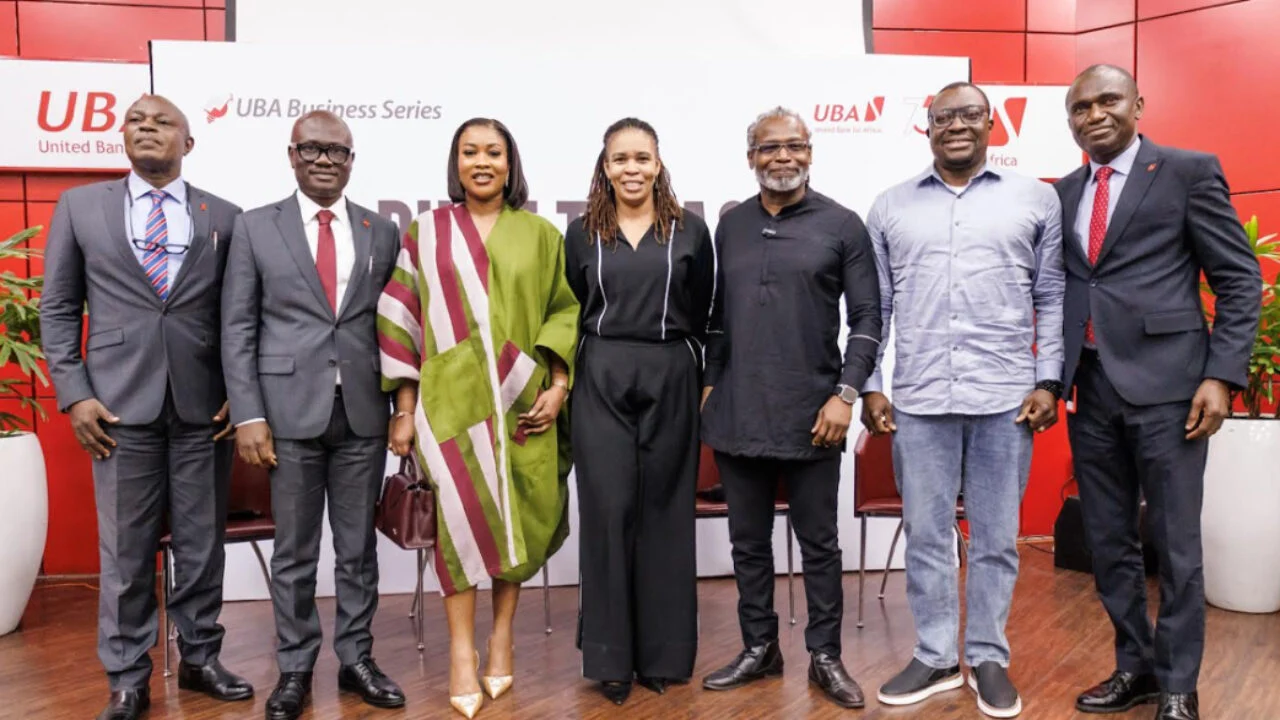
As part of activities to commemorate its 75th anniversary, Africa’s Global Bank - United Bank for Africa (UBA) Plc, has held a special edition of its quarterly Business Series with the aim of boosting business sustainability, especially for its customers who run Medium and Small-Scale Enterprises (MSMEs).

This edition of the UBA Business Series was held at the Tony Elumelu Amphitheater in UBA House on Thursday with the theme: “Built to Last: Building Generational Businesses”, and at the event, veteran businessmen and Chief Executive Officers from various fields of business shared valuable insights on how SMEs can run profitable ventures that will stand the test of time.

Professionals who have run businesses for several years including Veteran Stand-up Comedian/CEO XQZMOI Television, Atunyota Ali Akpobome (Ali Baba); Creative Photographer, Kelechi Amadi-Obi; CEO, Diaryofakitchenlover, Omotolani Tayo-Osikoya (Chef T); and CEO, Melvin Marsh International Ltd from Kenya, Flora Mutahi, took time to explain how passion, creativity and evolution are important if businesses are to last and remain relevant in the future.

“As a business owner, you need to come up with ways to ensure that you stay on top of your game and remain relevant, this is where creativity comes in, you need to study the sector where you operate and come up with ways to bring dynamism to your business,” Ali Baba said.

On her part, Chef T advised SMEs to continue to look for ways to stand out in their businesses; “You need to figure out your differentiating factor, it is about knowing what your customers expect of you and finding a way to achieve that,” she stated.

Speaking on his winning strategies, Kelechi Amadi-Obi, said, “My goal has always been to make an impact, first for myself and then for the client, because, I believe that your product is a function of your creativity, therefore you need to evolve.”

Flora Mutahi, who joined virtually from Kenya, admitted that indeed Africa has great potential to harness the entrepreneurial spirit that has become a revolution, and thus emphasised the need for persistence in growing a brand that lasts.

UBA's Group Head, Retail and Digital Banking, Shamsideen Fashola, who appreciated the professionals for the insightful business tips, remarked that as a thriving global financial institution with operations across 20 African countries and four business nerve centres including US, UK, France and UAE, UBA which in itself has lasted over seven decades focuses on empowering other business owners to build sustainable businesses.

“At UBA, it is not just about Banking, we are also passionate about helping our customers to grow thriving businesses, and that is why we do this on a regular basis. I therefore commend these professionals who have taken time to come and share insights on building sustainable businesses. I know we have learnt a lot, and this will go a long way for all of us,” he explained. 

The UBA Business Series is a regular seminar/workshop organised by the bank as one of its capacity-building initiatives, where leading business leaders and professionals share well-researched insights on relevant topics and best practices for running successful businesses, especially in difficult business challenges.

UBA Business Series! Experts Site Innovation, Persistence, Regular Assessments, Key for Lasting Businesses

Nigerians decries hike in fees of International Passports to N50k,N100k

Nigerians decries hike in fees of International Passports to N50k,N100k


The Federal Government has approved an upward review of the fees for the Nigerian passport effective from September 1, 2024.

This was disclosed in a statement issued on Wednesday by the spokesman for the Nigeria Immigration Service, Kenneth Udo, on the X handle of the NIS.

The increment aims to ensure the quality and integrity of the Nigerian Standard Passport, Udo said.

“As part of its efforts to maintain the quality and integrity of the Nigerian Standard Passport, the Federal Government has approved an upward review of the fees for the passport, effective from September 1, 2024.

“Based on the review, a 32-page passport booklet with five-year validity previously charged at N35,000 will now be N50,000 only; while a 64-page passport booklet with 10-year validity which was N70,000 will be N100,000,” the statement read.

The NIS said though it regretted “any inconvenience this increase might cause prospective applicants,” it assured Nigerians of “unwavering commitment to transparency and quality service delivery at all times.”

Meanwhile,Nigerians across social media platforms such as X, Facebook and Instagram, have expressed disappointment at the recently increased fees for Nigerian Standard Passport.

Part of the concerns raised by some of the social media users range from corruption of some NIS officials who charge extra, unofficial fees; to the economic hardship in the country, inflation, insensitivity of the government to the masses, among others.

On X.com, Callme_Wéalth EndSars, tweeting as #Lexyzdoo, wrote, “Online 50k, offline 100k for 32 pages.”

A Facebook user, Taiwo Olaoye, stated, “Without the hiked-up fees, you still have to pay an arm and a leg as bribery for them to do their jobs. That’s why my passport will forever remain expired. It will end up being expired in five years anyway.”


An X user, Adewale ‘Damilare, tweeting as #dammygtnet, said, “Una dun increase money for passport issuance again. You guys are testing our patience!”

Another tweep, Hemjay of Life, with the username #MuritalaMujeebA, tweeted, “And it is not as if your useless officers will not still collect bribe at point of biometrics oo.”

An X user, E.J, tweeting as #Enwagboso, asked the FG to delay the effective date of the new passport fees to 2025.

He wrote, “The 10-day notice for the passport price increase is an example of the government’s lack of empathy and consideration for its citizens. #officialABAT and #nigimmigration should know this. I recommend reviewing the pricing strategy and considering a reversal or, at the very least, a delayed effective date of January 1, 2025.”

A Facebook user, Celestine Uzodike wrote, “Every agency is in a hurry to extort the masses at this crucial period. Very insensitive Govt.”

Another Facebook user, Emecheta David, queried, “So to maintain the integrity of the passport, you’ll increase the price? Which integrity does the Nigerian passport possess that you are maintaining?”

An Instagram user, #l_ayk_an, wrote, “Making japa expensive but yet making Nigeria worse and unlivable.”

Another user, identified as #officialcollinzo, said, “Very soon to breath for this Nigeria go be 1k per 1hr.”

According to the Henley Passport Index, the Nigerian passport was ranked 92nd out of 199 passports, highlighting the challenges its citizens face regarding international travel freedom.

 
Nigerians decries hike in fees of International Passports to N50k,N100k

We won’t accept push to change govt — National Security Council •says displaying foreign flag treasonous


The Nigeria's National Security Council has warned that it will not accept the push for a change of government in the country and has described the use of foreign flags as treasonous.

This came against the backdrop of a trending video of some protesters openly inviting the military to takeover government.

Emerging from the meeting presided over by President Bola Tinubu at the Presidential Villa, Abuja on Monday, the Chief of Defense Staff (CDS), General Christopher Musa, who spoke for the council, said that they military will go after protesters bearing foreign flags which he said impinges on the sovereignty of the country.

He said the action is treasonous, adding that President Tinubu has directed that such must not be allowed to hold sway.

General Musa also noted that the #EndBadGovernance which started as a peaceful protest, has turned to riot, saying that as previously hinted, the military has decided to move in as a result.


Briefing correspondents after the meeting, he said: “We wanted to brief Mr President on the situation on ground and we know that since the riot has started, all the security agencies you can see all of us together.


“Initially, when the riot started they said it was a peaceful riot, but we have realised that there are individuals that are willing to take advantage of it to cause mayhem. And we can see clearly what has happened since it has commenced. Criminals have taken over, a lot of looting taking place, stealing and all sorts happening.

And besides, all of us have seen it where foreign flags have been flown within the sovereignty of Nigeria, and that is totally unacceptable.

“We are warning in clear terms and the President has also said we should convey this, that we will not accept anybody, any individual flying any foreign flag in Nigeria.

“That is treasonable offense, and it will be viewed and treated as such.

“So, nobody shall allow himself to be used by any individual.

“Also the issue of coups, Nigeria is a sovereign nation, Nigeria is a democratic nation. All security agencies are here to defend democracy and ensure that democracy continues to thrive.

“We will not accept anyone pushing or taking any action, seemingly or for whatever reason to want to push for any change of government.

“Democracy is what we stand for, democracy is what will continue to defend.

“For those of them flying flags and if you’ll see a lot of them are kids being pushed to do that. We’re following up with those ones are sponsoring them. Those are pushing them because you know, the flags were also made. We have identified those areas and we are going to take serious action against that.

“The President is clear on his instructions for us not to accept anyone that wants to disrupt the peace and tranquility of Nigeria.

“And we are all standing here together to show Nigerians that we’re working closely, we are working together with synergy to ensure that there’s still peace and tranquility in Nigeria that we have assured Mr. President.”

On whether those behind the foreign flags have been identified, the CDS said: “I’m sure you have seen them on Tv, so the Tv will show because that is enough for you to see.”

General Musa denied that soldiers have been involved in looting along with others under the ongoing protest.

Asked about it, he said: “No. I think it has been cleared. I think it was also a misconception. They actually have seen those things and they wanted to clear them away and that’s what was done. We have investigated throughly, the Chief of Army Staff is here. We have investigated thoroughly and there is nothing like such. No member of the Armed Forces fall into doing that. And he’s very clear.

“We’ve said that clearly that the military is going to step in when it is out of hand and you can see that for people supervising elements to push individuals to carry Russian flags in Nigeria. Nigeria is sovereign, and that is crossing the red line and we will not accept that. And those ones who have done that will go in for the books and they want to be prosecuted.”

The National Security Council meeting came amid the ongoing nationwide #EndBadGovernance protest, which continued in Abuja on Monday despite President Tinubu’s attempt to pacify Nigerians in his Sunday national broadcast.

The meeting caused the indefinite postponement of the Federal Executive Council (FEC) earlier scheduled for day.

The council meeting was attended by all heads of security and law enforcement agencies inside the president’s office.

Specifically at the meeting were Vice President Kashim Shettima, the Chief of Staff to the President, Femi Gbajabiamila; the National Security Adviser (NSA), Mallam Nuhu Ribadu; the CDS) and the three service chiefs; as well as the Inspector General of Police (IGP), Kayode Egbetokun.

Also in the meeting were the Director-General of the Department of State Service (DSS), Yusuf Bichi; Director-General of the National Intelligence Agency (NIA), Ahmed Rufai, Comptroller-General of the Nigerian Customs Service (NCS), Col Adewale Adeniyi; as well as the Comptroller-General of the Nigerian Immigration Service (NIS), Kemi Nanna Nandap.


We won’t accept push to change govt — National Security Council •says displaying foreign flag treasonous

Extortion! TASUED graduates protest alumni membership fee hike


Some former students of Tai Solarin University of Education, Ijagun, Ijebu-Ode, Ogun State, have expressed displeasure at the increase in the alumni membership fee from N5,000 to N20,000.

The ex-students, who spoke with in separate interviews on Monday, described the increase as arbitrary and insensitive to the country’s economic situation.

Some alumni members claimed that the fee provided no benefits and was merely a way to extort them, many of whom were unaware of the association’s activities.

A member of the 2019 set, Mathew Abiodun, criticised the increase, calling it inconsiderate given the hardship members faced due to the economic situation.

He noted that efforts to get an explanation from the alumni president yielded no result, as there had been no communication to justify the increase.

Abiodun said, “The increase in the alumni fee is pure wickedness. When I graduated in 2019, it was N2,500, before it was raised to N5,000, and now to N20,000.

“Given the current economic challenges, most people can barely afford daily meals. Every time you need to collect a document from the school, you are required to pay the alumni fee, which shouldn’t be the case.”

He urged the alumni leadership to reverse the decision and maintain the N5,000 fee.

“We are calling for a return to the N5,000 fee and demand that the president explains the reason for the increase.”

A member of the 2017 set, Oluwagbenga Orolu, alleged that the association, which was supposed to be voluntary, was made compulsory as a means of extortion.

He criticised the association’s leadership, stating that it had no direct impact on the members.

Orolu said, “The increase from N5,000 to N20,000 is a staggering 400 per cent hike. The initial fees didn’t benefit members, and now they’re talking about an increase. If the association was effective, there would be no need to compel people to pay.

“The worst part is that the fee is required multiple times. Each time you need a document from the school, you’re asked to pay the alumni fee, even within a short time.”

Another ex-student, who wished to remain anonymous, noted that when the issue was raised on the association’s WhatsApp platform, the president locked the group instead of justifying the increase.

“While the alumni were expressing concerns about the unjust increase, the president locked the WhatsApp group. Alumni associations should not be a means of making a profit.

“This is leadership through extortion and oppression.”

When contacted, the President of the TASUED Alumni Association, Julius Oladeji, ended the call after our correspondent introduced himself as a journalist. Repeated calls and messages were not answered as of the time of filing this report.

Meanwhile, the association’s Public Relations Officer, Ademolu Adenuga, said in a telephone conversation on Monday that an official response would be made public soon.

“I am currently in Osogbo. When I return, I will officially address their concerns,” Adenuga said.PUNCH Metro

Extortion! TASUED graduates protest alumni membership fee hike

Second Female CJN! All You Need To Know About Justice Kudirat Motonmori Olatokunbo Kekere-Ekun


The Honourable Justice Kudirat Motonmori Olatokunbo Kekere-Ekun, CFR, the most senior justice of the Supreme Court, is set to be sworn in as Chief Justice of Nigeria (CJN) following the retirement of the current CJN on August 22nd, 2024. She will be the second female CJN in Nigeria’s history, succeeding Hon. Justice Mariam Aloma Mukhtar, GCON, who served from July 2012 to November 2014.

66 year old Justice Kekere-Ekun is expected to serve till May, 2028, when she attains the mandatory retirement age of 70. She will also become the Chairman of the National Judicial Council (NJC), which oversees the appointment, promotion, and discipline of Judicial Officers in Nigeria.

Hon. Justice Kudirat Motonmori Olatokunbo Kekere-Ekun is a serving Justice of the Supreme Court of Nigeria. She is the 5th and youngest female to be appointed as a Justice of the Supreme Court of Nigeria. This article examines the early life, education, and notable achievements of Hon. Justice K.M.O. Kekere-Ekun.


Justice Kekere-Ekun was born in London, the United Kingdom on 7th May 1958. Her parents were both indigenes of Lagos State, Nigeria. She is the eldest of eleven siblings from both parents. Her father, Alhaji Senator H.A.B. Fasinro, OFR, LL.D, was a fervent Muslim and a very dedicated family man of noble lineage. He belonged to at least 3 Royal Families in Lagos. He was a legal practitioner and very active in politics. Throughout his career, he worked for many years as a Crown Counsel in the old Western Region of Nigeria. He also became the Town Clerk of Lagos City Council (similar to being the Mayor of Lagos). In 1975, at the age of 56 years, he retired voluntarily from the civil service. He subsequently became a Senator of the Federal Republic of Nigeria in 1983. His tenure was however brought to an abrupt end with the overthrow of the Alhaji Shehu Shagari-led civilian government in a military coup in December 1983. He was also an author. He died at the age of 99 on 31st March 2019.


Her mother, Mrs. Winifred Layiwola Ogundimu (née Savage), is a devout Christian. She studied nursing in the UK, where she qualified as a Public Health Nurse before returning to Nigeria in December 1965. Upon her return to Nigeria, she built her career in the civil service of Lagos State and retired years later, at the age of 60. Mrs. Ogundimu is currently the head of a large and prominent Lagos family, the Savage Family.

Alhaji Senator H.A.B. Fasinro, OFR, LL.D, and Mrs. Winifred Layiwola Ogundimu both remarried when K.M.O. Kekere-Ekun was still young. K.M.O. Kekere-Ekun grew up in a polygamous home with her father, stepmothers, siblings, and other relations. One of her stepmothers, who greatly influenced her life, was a teacher. She was brought up in an extremely strict and disciplined environment at home, where she was taught lasting values such as hard work, integrity, contentment, and the ability to get on with most people and to cope with most situations. It was always a full house with extended family and other school children spending their holidays, to earn extra tutoring and a disciplined upbringing.


K.M.O. Kekere-Ekun was privileged with quality education. She attended private primary schools before proceeding in 1970 to Queen’s College, Lagos, which was the best Federal Government College for girls in the country at the time. She studied Law at the University of Lagos, Nigeria, from 1977 to 1980 and obtained her LL.B in 1980. Following this, she attended the Nigerian Law School from 1980 to 1981 and was called to the Nigerian Bar in July 1981. From 1981 to 1982, she was engaged in the compulsory National Youth Service at the Ministry of Justice, Benin City, Bendel State (now Edo State). Afterwards, she proceeded to the London School of Economics and Political Science (LSE) where she obtained a master’s degree in law in 1983.


After qualifying as a lawyer and obtaining a master’s degree in law from the London School of Economics and Political Science (LSE), she worked in private law practice for a few years. As a result of the toll of the demands of private practice on her domestic responsibilities, she decided to join the bench to be able to enjoy more predictable work hours. She applied and was appointed by the Lagos State Judiciary as a Senior Magistrate Grade II in December 1989. This marked the beginning of her career on the bench. She was subsequently appointed a Judge of the High Court of Lagos State on 19th July 1996. In September 2004, she was elevated to the Court of Appeal. As a Justice of the Court of Appeal, she served in five different Divisions across the country. She was the pioneer Presiding Justice of the Makurdi Division of the Court of Appeal, and also served as the Presiding Justice of the Akure Division of the Court of Appeal before her elevation to the Supreme Court on 8th July 2013. She is currently a member of the Supreme Court Rules Committee and Chairman of the Supervisory Committee of the Litigation Department of the Court.


K.M.O. Kekere-Ekun served as Chairman of the Robbery and Firearms Tribunal, Zone II, Ikeja, Lagos, from November 1996 to May 1999, when the Tribunals were abolished. The constitution of the Tribunal included one Police officer and one Military officer. In the process, the Police officer gained significant insight into the requirements for conducting effective criminal investigations and prosecutions. He was subsequently posted to the Police College (where recruits are trained) as a lecturer and was able to share a lot of what he had learned from his participation in the Tribunal hearings. In recognition of her reputation for integrity and hard work, she was one of 3 Judges of the Lagos State High Court first selected to try offences relating to financial crimes and money laundering under the Economic and Financial Crimes Commission Establishment Act, 2004 and the Corrupt Practices and Other Related Offences Act, 2000.


Furthermore, in 2003, K.M.O. Kekere-Ekun served as a member of the Ethics Curriculum Planning Committee of the National Center for State Courts (NCSC), in collaboration with the Department for International Development (DFID) and UNODC. This committee produced the Code of Conduct for Judicial Employees. She also chaired the Public Complaints and Training Committee that was part of the UNODC pilot project on strengthening judicial integrity and capacity in Lagos State. This was from February 2003 till July 2004. The Public Complaints Committee investigated complaints against magistrates in the performance of their official duties and became pivotal for the reform of the justice delivery system in the magistrate courts. Moreover, she served as a supervisory judge in charge of the Apapa Magisterial District in Lagos State from October 2002 till July 2004. She also served as a member of the committee that drafted the High Court of Lagos State (Civil Procedure) Rules 2004 from April 2002 till December 2002. The new Civil Procedure Rules introduced innovations in case management such as the front-loading concept, pre-trial conference, and the application of ADR mechanisms for the speedy dispensation of justice. The innovations have also been adopted by most states of the Federation and have proved particularly helpful in the speedy dispensation of electoral disputes.


From December 2001 till December 2004, she served as a member of the Steering Committee of the Lagos State Multi-Door Court House, the first court-connected Alternative Dispute Resolution centre in Africa. At the Court of Appeal, she served on the Information Technology Committee, which was to facilitate the computerization of the Court. Hon. Justice K.M.O. Kekere-Ekun is a recipient of prestigious awards. She was a recipient of the Merit Awards of the Lagos State Judiciary, in December 2003 and in September 2013. Again, she was twice awarded the Distinguished Trailblazers Awards by the Nigerian Bar Association Women Forum (August 2012 and 2014). She belongs to several professional associations and groups, including the National Association of Women Judges; International Association of Women Judges; Body of Benchers – Life Bencher W.E.F. 8th February 2018; Nigerian Institute of Advanced Legal Studies (Fellow); and International Dispute Resolution Institute (Fellow). She is also a member of the Ikoyi Club 1938. Hon. Justice K.M.O. Kekere-Ekun has been married to Mr. Akin Kekere-Ekun, OFR, since December 1983. His work ethic and integrity have been a great motivating factor for her. Their union is blessed with three children who are all graduates and excelling in their chosen fields. K.M.O. Kekere-Ekun is passionate about self-examination, being the change that one wants to see in the world and setting your standards early, starting every endeavour in the same manner as one means to carry on. These have been her guiding principles in her personal and professional life.

Second Female CJN! All You Need To Know About Justice Kudirat Motonmori Olatokunbo Kekere-Ekun

#EndBadGovernnance! Protesters Shout Down Minister As Police Fire Teargas At Eagle Square


Police personnel stationed at Eagle Square in the Federal Capital Territory (FCT) on Thursday fired the teargas in the air to disperse a handful of protesters against hardship in the country, who gathered around the facility to register their feelings about the state of the nation.

It was observed that a handful of protesters came to the area against the widely publicised information that an FCT Court had earlier on Wednesday approved Moshood Abiola National Stadium as the venue of their action.

Sighting them, the police who made efforts to let them leave the area were moved to make the area unconducive for the protest and shot canisters of tear gas into the air.

However, those who gathered at the stadium led by an Abuja-based lawyer, Deji Adeyanju, were disallowed from using the stadium by security personnel.

The protesters were also seen in high spirits at Moshood Abiola stadium in Abuja.

The protesters are very orderly and determined to expressed their mood.

Meanwhile,the Minister of State for Youths Development, Ayodele Olawande, was shouted down when he tried to address enraged #EndBadGovernance protesters at the Eagle Square in Abuja.

The protesters shouted Olawande down and continued to chant “Hunger dey”, disallowing the Minister from speaking to them.


Meanwhile, after calming down the crowd, the Minister said he was not attempting to shut down the protest, describing himself as a fellow Comrade, who had attended between a hundred and five hundred protests in the past.

“I am not here to fight you, I’m not here to ask you not to protest, it is your right. Like I said, I have been to over 100 to 500 protests,” he said.

The Minister also assured that he would address the Police regarding the shooting of teargas canisters against the protesters.

Meanwhile, protesters have insisted they would not join their fellow #EndBadGovernance protesters at the Moshood Abiola National Stadium, noting that a few days ago, a pro-government women protesters had used the Eagle Square without interference by the Police.

#EndBadGovernnance! Protesters Shout Down Minister As Police Fire Teargas At Eagle Square
Image

Download Our Mobile App

Image
Image